
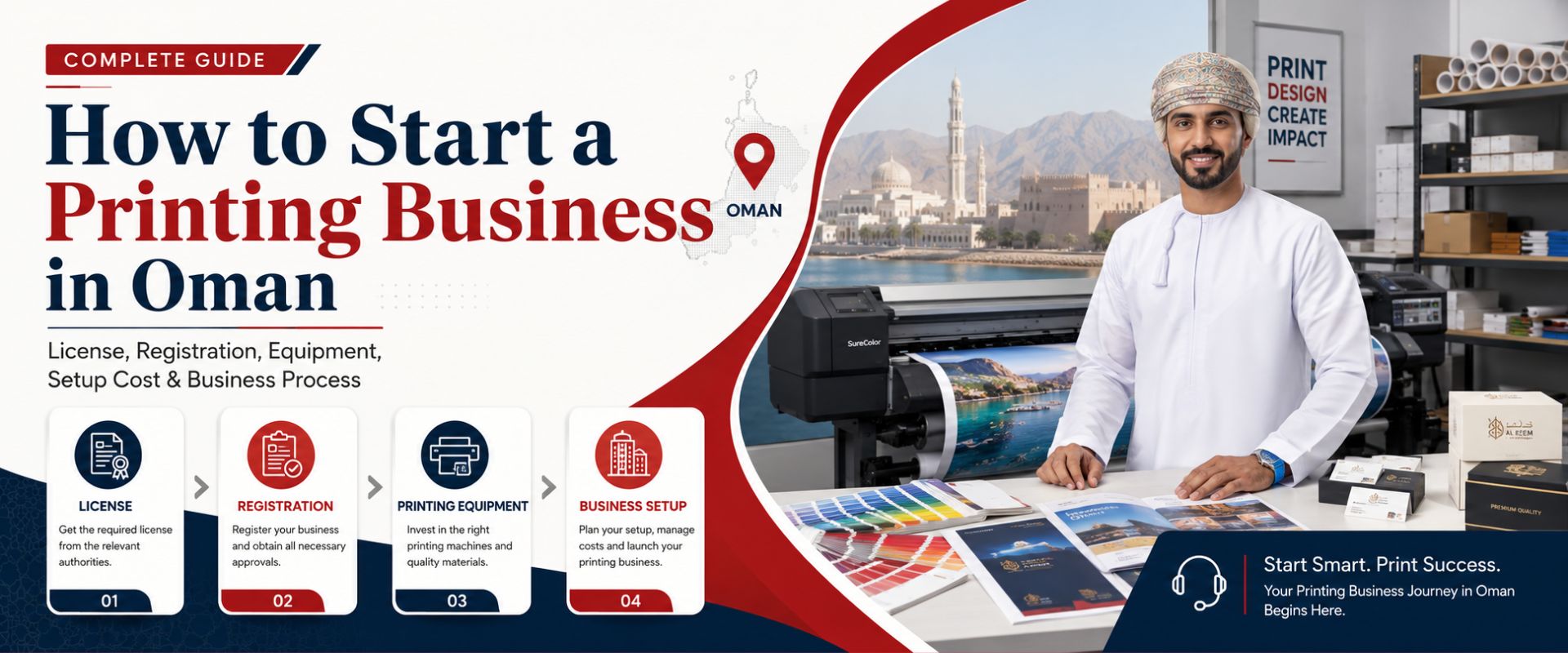

The printing industry in Oman continues thriving as businesses, government entities, educational institutions, and individuals require professional printing services for marketing materials, corporate communications, publications, and personal projects. Despite digital transformation, demand for high-quality printed materials remains strong across advertising, packaging, publishing, and commercial sectors. Whether you’re planning a general printing shop, specialized digital printing service, or large-scale commercial printing operation, understanding the complete setup process ensures you establish a profitable, compliant business in this essential service industry.
This comprehensive guide provides everything you need to launch your printing business successfully in Oman’s dynamic market.
Table of Contents
Why Start a Printing Business in Oman
The Omani printing market offers compelling opportunities for entrepreneurs with the right equipment, expertise, and business approach.
Consistent Market Demand
Corporate clients require continuous printing for business cards, letterheads, brochures, annual reports, presentation materials, and internal documentation. Advertising agencies and marketing companies need promotional materials including flyers, posters, banners, and point-of-sale displays for client campaigns.
Educational institutions including schools, universities, and training centers order workbooks, certificates, examination papers, and administrative materials. Government departments require forms, official documents, tender documentation, and public information materials.
Event organizers need invitations, programs, tickets, banners, and promotional materials for conferences, weddings, and celebrations. Retail businesses order packaging, labels, price tags, and promotional materials. Publishing houses and authors require book printing, magazine production, and periodical printing.
This diverse customer base provides revenue stability across multiple sectors reducing dependence on single market segments.
Growing Business Activity
Oman’s economic diversification under Vision 2040 stimulates business growth across tourism, logistics, manufacturing, and services creating expanded printing needs. SME development increases demand from startups and small businesses requiring affordable marketing materials. Tourism promotion drives production of brochures, maps, guides, and promotional materials.
E-commerce growth paradoxically increases packaging and shipping label demand. Corporate events and trade exhibitions generate orders for banners, booth graphics, and promotional materials.
Technology Advancement
Modern digital printing technology enables small-batch production making printing accessible to businesses with limited budgets. Print-on-demand services reduce inventory costs allowing customers to order exactly what they need. Variable data printing enables personalized marketing materials with individualized content.
Wide-format printing creates opportunities for signage, vehicle wraps, and large displays. 3D printing represents an emerging frontier though still developing in Oman’s market.
Competitive Advantages
The market includes established players but still offers opportunities for newcomers who differentiate through specialized services targeting niche markets like luxury packaging or art reproduction, superior quality using premium materials and advanced equipment, faster turnaround meeting urgent deadlines competitors can’t accommodate, competitive pricing for budget-conscious customers, and exceptional customer service building loyalty through personalized attention.
Step-by-Step Process to Starting a Printing Business in Oman
Successfully establishing your printing company involves systematic progression through planning, registration, equipment acquisition, and operational launch.
Step 1: Conduct Market Research
Identify your target market segments including corporate clients, advertising agencies, retail businesses, or individual consumers. Research existing competitors analyzing their services, pricing, quality standards, and customer reviews. Determine profitable niches where you can differentiate including specialty printing, large-format graphics, or specific industries.
Assess location options considering proximity to target customers, accessibility for deliveries, adequate space for equipment, and competitive rental costs. Survey potential clients understanding their printing needs, budget ranges, quality expectations, and service preferences.
Step 2: Develop Business Plan
Create comprehensive planning outlining business objectives and vision, target market analysis and customer profiles, service offerings and specializations, equipment requirements and technology investments, pricing strategies and revenue projections, marketing and customer acquisition plans, and financial forecasts including startup costs and profitability timelines.
Strong business plans demonstrate viability to regulatory authorities, equipment suppliers offering financing, and potential investors or partners.
Step 3: Choose Business Structure
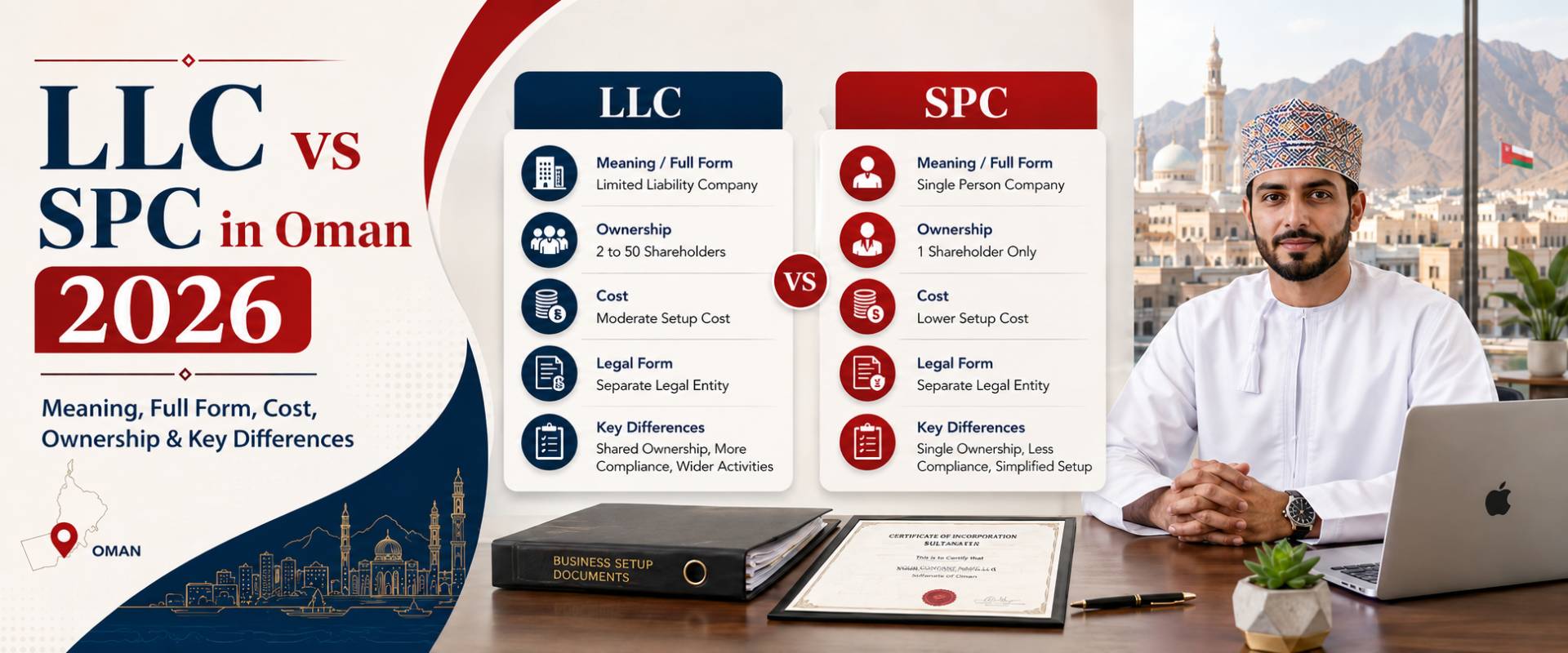
Select appropriate legal structure based on ownership and scale. Sole Proprietorship suits individual operators starting small operations. Limited Liability Company (LLC) provides liability protection and professional credibility for partnerships or larger ventures planning significant equipment investment and staff hiring.
Most commercial printing businesses establish LLCs for banking relationships, supplier credit terms, and corporate client confidence.
Step 4: Register Your Business
Submit registration application to the Ministry of Commerce, Industry and Investment Promotion (MOCIIP) including trade name reservation, business plan detailing printing services, partnership agreements if establishing LLC, and capital deposit (typically OMR 20,000-30,000 for LLCs).
MOCIIP processes applications issuing Commercial Registration certificates within 7-10 working days establishing your legal business entity.
Step 5: Obtain Publication License
The Ministry of Information regulates printing activities particularly for publications, books, and materials distributed publicly. Apply for a printing license or publication permit submitting your Commercial Registration, facility details, equipment specifications, and operational procedures.
This license authorizes legal printing operations and ensures compliance with content regulations and intellectual property laws. Processing typically requires 2-4 weeks.
Step 6: Secure Municipal License
Register with the local municipality obtaining a business license for your printing facility. Submit Commercial Registration, facility lease agreement, and Civil Defense clearance certificate. Municipal fees range OMR 200-500 annually depending on location and facility size.
Municipal inspectors verify premises meet commercial standards including adequate ventilation for printing equipment, proper electrical capacity, safety equipment and fire extinguishers, and appropriate zoning for industrial or commercial use.
Step 7: Acquire Printing Equipment
Purchase essential equipment based on your service offerings. Digital printing equipment including high-quality color printers, large-format printers for posters and banners, and multifunction devices for copying and scanning typically costs OMR 8,000-40,000 depending on capacity and quality.
Offset printing presses for high-volume commercial printing range OMR 50,000-200,000 for professional equipment. Finishing equipment including cutting machines, binding equipment, laminating machines, and folding machines costs OMR 5,000-20,000.
Design workstations with professional computers, graphic design software, and color calibration tools require OMR 3,000-10,000 investment.
Consider leasing arrangements reducing initial capital requirements while accessing professional equipment. Many suppliers offer financing options spreading costs over 2-5 years.
Step 8: Set Up Your Facility
Establish operational space with production area for printing equipment with adequate power supply, design studio for customer consultations and file preparation, storage area for paper stock and supplies, and reception area for customer service.
Facility size depends on equipment and service scope. Small digital printing shops operate in 100-200 square meters while commercial operations require 300-800 square meters or more.
Step 9: Source Materials and Supplies
Build relationships with suppliers providing paper stock in various grades and sizes, printing inks and toners, binding materials and finishing supplies, and packaging materials for completed orders.
Reliable suppliers offering competitive pricing, consistent quality, and prompt delivery prove essential for maintaining service standards and profitability.
Step 10: Hire and Train Staff
Recruit qualified personnel including experienced printing operators, graphic designers for file preparation, customer service representatives, and sales personnel for business development.
Provide training covering equipment operation and maintenance, quality control procedures, customer service standards, and safety protocols.
Step 11: Launch Marketing Campaigns
Promote your printing services through professional websites showcasing portfolio and capabilities, social media presence sharing completed projects, direct outreach to potential corporate clients, partnerships with advertising agencies and event planners, promotional offers for new customers, and business networking through chambers of commerce.
Word-of-mouth from satisfied customers provides powerful marketing as quality and reliability build reputation.
Document Required To Open a Printing Business in Oman
Comprehensive documentation ensures smooth registration and licensing:
- Valid passport (for foreign investors) or National ID (for Omani citizens)
- Detailed business plan outlining printing services and operations
- Partnership agreements and Memorandum of Association (for LLCs)
- Capital deposit certificates from Omani banks
- Facility lease agreement or property ownership documents
- Architectural plans showing facility layout
- Equipment specifications and purchase invoices
- Commercial Registration from MOCIIP
- Printing license application for Ministry of Information
- Municipal business license application
- Civil Defense clearance certificate
- Insurance policies covering equipment and liability
- Staff employment contracts and qualifications
- Environmental compliance documentation (for large operations)
- Supplier agreements and material sourcing plans
Benefits of Starting a Printing Business in Oman
Establishing a printing company offers numerous strategic advantages.
Recurring Revenue Opportunities
Corporate clients requiring ongoing printing for business operations, marketing campaigns, and administrative needs provide recurring revenue streams through regular repeat orders. Establishing long-term relationships with businesses ensures predictable monthly income.
Contract agreements with government departments, educational institutions, or large corporations guarantee minimum order volumes providing revenue stability.
Diverse Income Sources
Beyond basic printing, generate additional revenue through graphic design services, delivery and installation for large-format materials, photography services for marketing materials, promotional product printing on items like mugs and t-shirts, and digital services including website design and social media graphics.
Service diversification increases average transaction values and attracts broader customer bases.
Scalability Potential
Start with basic digital printing equipment serving small businesses and individuals, then expand adding offset presses for high-volume commercial work, large-format printers for signage and displays, specialized equipment for packaging or labels, and additional locations serving different geographic areas.
Incremental investment enables controlled growth matching market demand and cash flow availability.
Professional Satisfaction
Printing businesses produce tangible products customers use, achieving marketing goals, celebrating personal milestones, or conducting business operations. Seeing your work displayed publicly on billboards, in publications, or at events provides professional satisfaction beyond purely financial rewards.
Cost of Starting a Printing Business in Oman
Understanding complete financial requirements enables realistic planning:
Registration and Licensing
- MOCIIP business registration: OMR 300-500
- Ministry of Information printing license: OMR 300-800
- Municipal business license: OMR 200-500
Equipment Investment
- Digital printing equipment: OMR 8,000-40,000
- Offset press (for commercial operations): OMR 50,000-200,000
- Finishing equipment: OMR 5,000-20,000
- Design workstations: OMR 3,000-10,000
Facility and Setup
- LLC minimum capital (if applicable): OMR 20,000-30,000
- Facility lease deposit and rent (6 months): OMR 3,000-15,000
- Facility improvements and setup: OMR 3,000-12,000
- Furniture and fixtures: OMR 2,000-6,000
Initial Inventory
- Paper stock and materials: OMR 3,000-10,000
- Inks, toners, and consumables: OMR 2,000-6,000
Operational Costs
- Staff recruitment and training: OMR 2,000-6,000
- Initial salaries (3 months): OMR 6,000-18,000
- Marketing and branding: OMR 2,000-8,000
- Insurance: OMR 1,000-4,000
- Working capital: OMR 5,000-15,000
Total Estimated Investment:
- Small digital printing shop: OMR 65,800-181,800
- Commercial printing operation: OMR 150,000-400,000+
Starting small with digital equipment and expanding gradually reduces initial capital requirements while building customer base and operational expertise.
Conclusion
Starting a printing business in Oman offers promising opportunities in a market requiring professional printing services across corporate, commercial, educational, and personal sectors. Success requires thorough planning, appropriate licensing from MOCIIP and Ministry of Information, strategic equipment investment, skilled staff, and effective marketing building customer relationships.
Investment requirements vary significantly based on scale and specialization from OMR 65,800 for small digital operations to OMR 400,000+ for comprehensive commercial facilities. Well-managed printing businesses achieve profitability within 18-30 months through consistent quality, competitive pricing, reliable service, and customer satisfaction.
The combination of Oman’s business growth, corporate expansion, and continued demand for printed materials creates favorable conditions for printing companies delivering quality products, meeting deadlines, and providing excellent customer service. For expert guidance on business setup in Oman, Make My Company provides comprehensive support helping entrepreneurs navigate registration procedures, licensing requirements, and operational launch efficiently.
Ready to establish your printing business and serve Oman’s diverse printing needs? Contact us today for personalized consultation on equipment selection, facility setup, regulatory compliance, and strategic business development. Our experienced team ensures your printing venture launches successfully, positioning you for sustainable growth in Oman’s dynamic printing industry.