
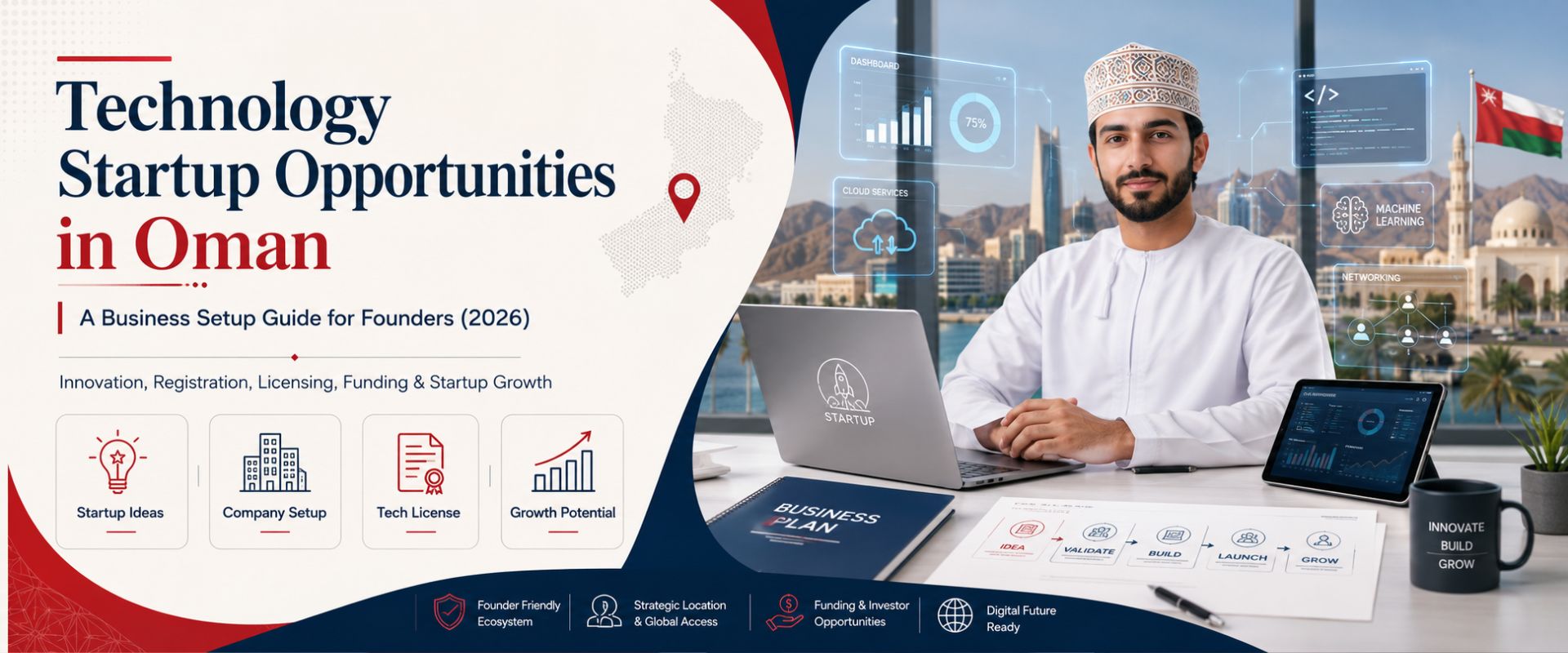

Starting a technology startup in Oman in 2026 involves three practical decisions: choosing the right legal structure, identifying which regulatory approvals apply to the tech activity, and selecting between a mainland company and a free zone entity. Oman’s regulatory environment has become progressively more accessible for both local and foreign tech founders, with 100% foreign ownership now permitted across most IT and digital services activities under the Foreign Capital Investment Law (Royal Decree 50/2019).
Beyond the legal framework, Oman’s digital infrastructure upgrades are creating real market gaps in enterprise software, cloud services, cybersecurity, healthtech, edtech, and logistics technology. Government agencies, large enterprises, and SMEs across the country are actively adopting digital tools, creating demand that smaller tech startups with focused solutions are well-positioned to serve. This guide covers the company setup process, costs, visa options, and the highest-potential tech sectors for founders targeting the Oman market in 2025 and 2026.
This guide focuses on identifying which tech sectors and market opportunities in Oman are worth pursuing, and the registration basics that follow from that choice. For the detailed activity-code selection, TRA rules, and IT-specific licensing mechanics, see our companion guide to starting an IT company in Oman.
Quick answer: The strongest tech startup opportunities in Oman right now are SaaS for SMEs, cybersecurity services, logistics technology, edtech and training platforms, healthtech, and fintech, largely because local supply hasn’t caught up with demand from government digitisation and enterprise cloud migration. A mainland LLC, SPC, or Knowledge Oasis Muscat (KOM) free zone entity can all offer 100% foreign ownership. Total first-year setup cost runs OMR 2,150 to 6,800 for an IT service business without a physical facility. Full sector analysis, structure comparison, and costs are below.
Business Opportunities in Oman for Low-Capital Tech Startups (2025 and 2026)
Oman’s market analysis for 2025 and 2026 highlights several technology sectors where demand is growing faster than local supply, creating entry points for low-capital startups that deliver focused software or digital service solutions:
| Tech Sector | Market Gap | Typical Startup Model |
|---|---|---|
| SaaS for SMEs | Most Omani SMEs use manual systems for accounting, HR, and inventory. Local-language SaaS tools are scarce | Monthly subscription model, low infrastructure cost, scalable across GCC |
| Cybersecurity services | Enterprise digital infrastructure upgrades are outpacing cybersecurity readiness across public and private sectors | Managed security service provider (MSSP) or security audit consultancy |
| Logistics tech | Port operations, last-mile delivery, and supply chain tracking gaps across Sohar and Muscat corridors | Tracking software, fleet management tools, route optimisation platforms |
| Edtech and training platforms | Omanisation requirements and upskilling demand across regulated sectors create consistent demand for LMS platforms | LMS subscription, corporate training portals, certification management |
| Healthtech | Telehealth adoption and clinic management software gaps across private and government healthcare providers | Clinic booking platforms, patient management systems, teleconsultation apps |
| Fintech and payment tools | Growing demand for digital payment integration, expense management, and accounting automation tools | API-based payment integrations, expense management SaaS, compliance tools |
The technology sectors with the lowest capital entry requirements in Oman are software consulting, digital marketing services, IT support, and SaaS product development. These can be started with a service-based IT trade license from MOCIIP with minimal physical infrastructure. For a broader view of business opportunities across sectors, see our analysis of company formation in Oman.
Best Company Structure for a Technology Startup in Oman
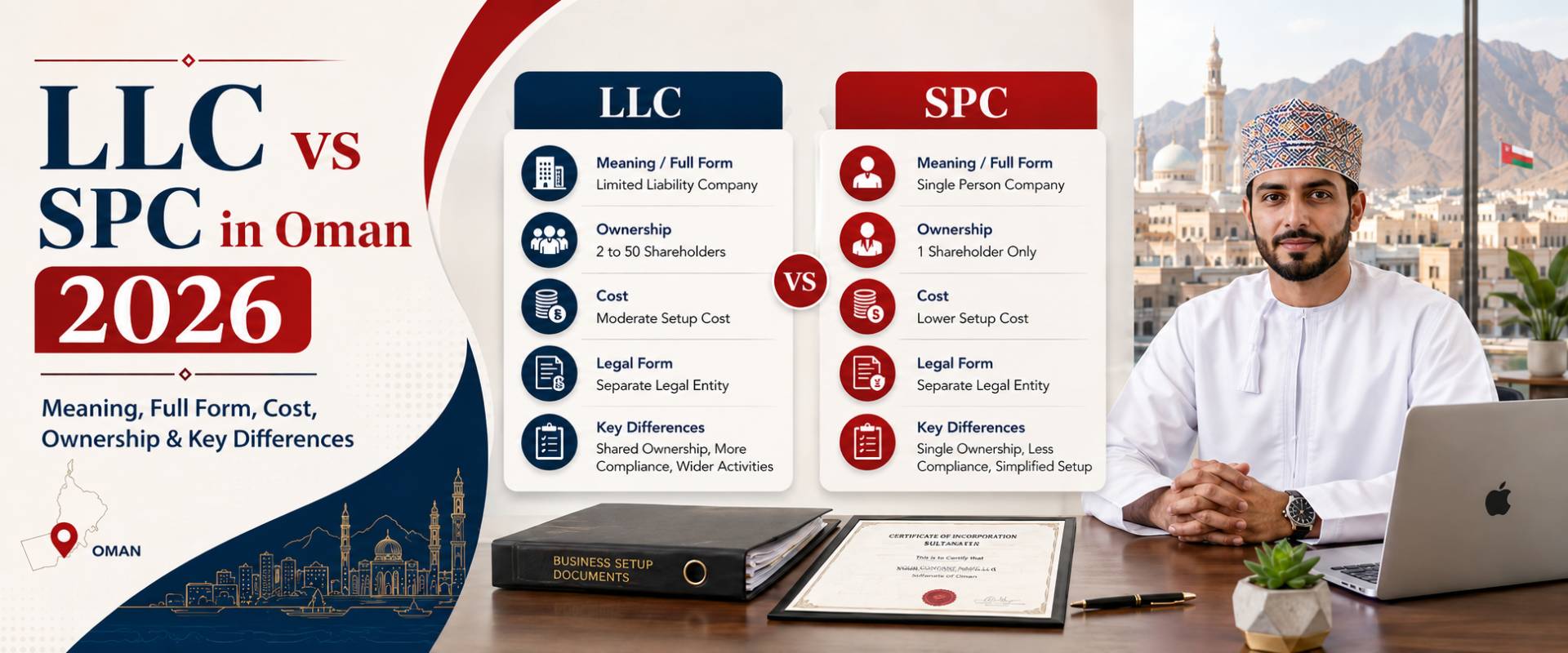
The three most commonly used structures for technology startups in Oman are the mainland LLC, the Single Person Company (SPC), and a free zone entity. Each suits different ownership, investment, and operational requirements:
| Factor | Mainland LLC | SPC (Single Person Company) | Free Zone Entity |
|---|---|---|---|
| Ownership | 1 to 40 shareholders, 100% foreign allowed for IT activities | 1 founder, 100% foreign allowed for IT activities | 100% foreign ownership |
| Minimum capital | No fixed minimum for Omani-owned, OMR 150,000 benchmark for foreign-owned | OMR 150,000 benchmark for foreign-owned | Varies by free zone (KOM: no minimum, SEZAD: varies by activity) |
| Client access | Full access to Oman mainland market, government tenders | Full mainland market access | Mainland clients require a local agent or branch |
| Best for | IT service companies, software agencies, fintech startups targeting local enterprises and government | Solo tech founders, consultants, freelance developers | Product-focused tech startups, international SaaS companies, R&D operations |
Knowledge Oasis Muscat and Free Zone Options for Tech Startups
Two free zone options are particularly relevant for technology startups in Oman:
Knowledge Oasis Muscat (KOM)
Knowledge Oasis Muscat is Oman’s dedicated technology and innovation free zone located in the Al Rusayl area near Muscat. KOM is specifically designed for technology, IT, telecom, media, and knowledge-based businesses. Key benefits for tech startups include 100% foreign ownership, simplified licensing for IT activities, access to a technology-focused business community, proximity to Sultan Qaboos University and research institutions, and connections to the Oman Technology Fund which provides seed and growth-stage investment to startups based in Oman.
KOM is the most appropriate free zone for software development companies, IT consultancies, and digital service businesses that want free zone benefits while remaining physically close to Muscat’s business hub and government entities.
SEZAD Duqm and Sohar Free Zone
The Special Economic Zone at Duqm (SEZAD) and Sohar Free Zone are primarily industrial and logistics free zones but also support technology businesses providing digital infrastructure, smart port solutions, and industrial technology services. Companies providing tech services to the energy, port, or manufacturing sectors may find these zones attractive for the combination of free zone benefits and proximity to major industrial clients. For a detailed comparison of Oman’s free zone options, see our guide to free zone company formation in Oman.
How to Register a Technology Company in Oman: Step-by-Step Process
Registering a technology startup on the Oman mainland is processed through the Invest Easy portal. The standard process for an IT company or software startup is:
| Step | Action |
|---|---|
| 1 | Reserve and approve the company trade name through the Invest Easy portal. IT and technology company names must not conflict with existing registered names and must comply with Oman’s naming conventions |
| 2 | Select the business activity. For technology startups the most common MOCIIP-listed activities are: IT consulting and services, software development, computer programming, IT systems integration, digital marketing services, and e-commerce platform operation. Fintech and payment services require additional approval from the Central Bank of Oman |
| 3 | Prepare and notarise the Memorandum of Association (MoA). For an LLC this requires a minimum of two shareholders. For an SPC a single founder is sufficient. Foreign shareholders must provide attested and legalised passport copies |
| 4 | Obtain a tenancy agreement for the registered office address. The premises must be a commercial-use property in Oman. Virtual office addresses are available for IT companies that do not require a physical operation floor |
| 5 | Submit the company formation application and MoA to MOCIIP through Invest Easy and pay the commercial registration and trade license fees online |
| 6 | Register with the Oman Chamber of Commerce and Industry (OCCI) and pay the annual membership fee |
| 7 | Obtain sector-specific approvals if required. Fintech startups require Central Bank of Oman approval. Telecom and internet service providers require Telecommunications Regulatory Authority (TRA) approval. Healthtech platforms may require MOH approval for clinical functions |
| 8 | Open a corporate bank account. Most Omani banks require the Commercial Registration, trade license, MoA, and OCCI certificate. Refer to our corporate bank account guide in Oman for full requirements |
Cost of Starting a Technology Startup in Oman (2026)
| Cost Item | Estimated Cost (OMR) |
|---|---|
| MOCIIP commercial registration and IT trade license (first year) | 450 to 1,500 |
| OCCI annual membership fee | 100 to 400 |
| Office tenancy (virtual office for IT startup, annual) | 300 to 800 |
| Notarisation and legal documentation | 200 to 600 |
| Municipality business license | 200 to 800 |
| Investor visa processing (per shareholder) | 400 to 700 |
| PRO and company formation service fee | 500 to 2,000 |
| Total estimated first-year startup cost | 2,150 to 6,800 |
The total cost of setting up a technology startup in Oman is significantly lower than in most GCC markets for IT service businesses that do not require a physical production facility. Virtual office solutions are accepted by MOCIIP for IT consultancy and software development companies, which removes the need for a full commercial lease in the first year. For a detailed cost breakdown across all company types, see our guide to company formation cost in Oman.
Oman Startup Visa and Investor Visa for Tech Founders
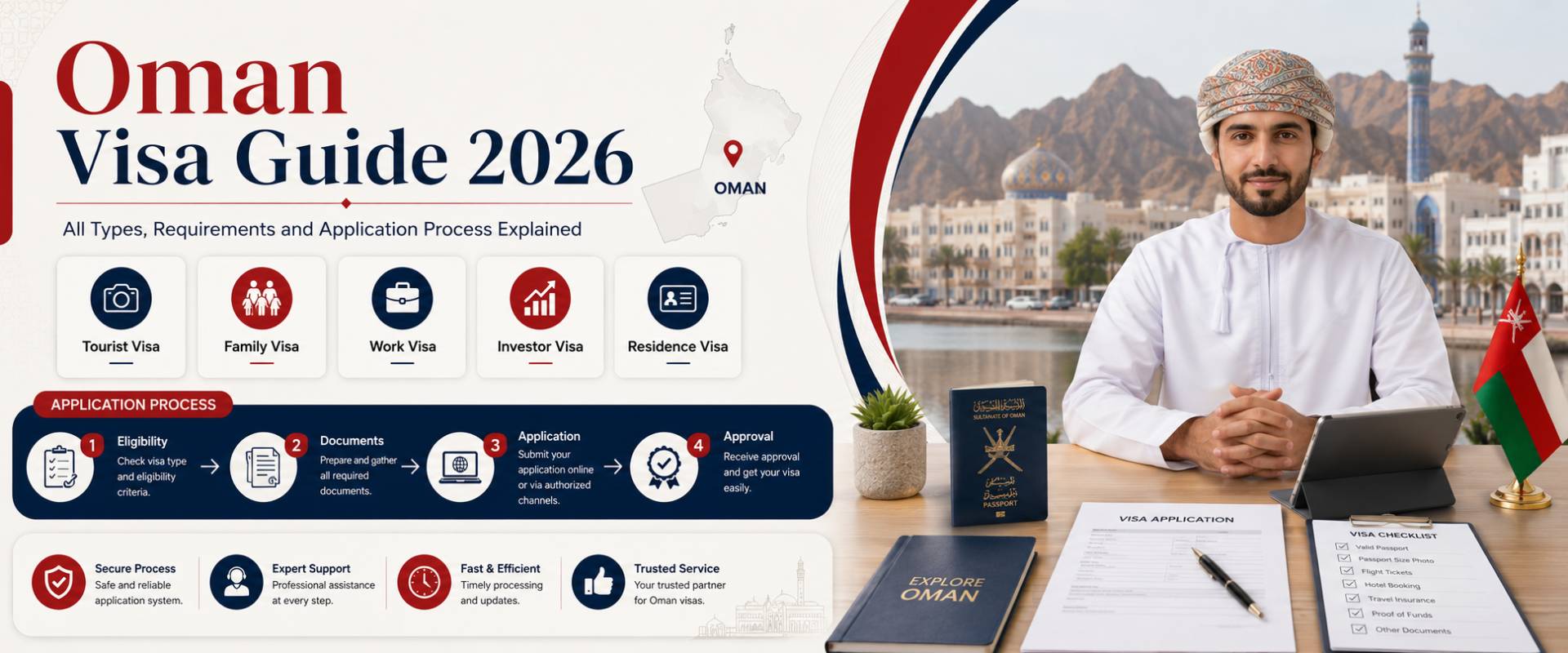
Oman does not currently have a dedicated startup visa category separate from its investor visa programme. Foreign tech founders establishing a company in Oman apply for an investor visa, which is issued to shareholders and directors of companies registered with MOCIIP. The investor visa allows the holder to reside in Oman, manage the business, open bank accounts, and sponsor employees under the company’s labour file.
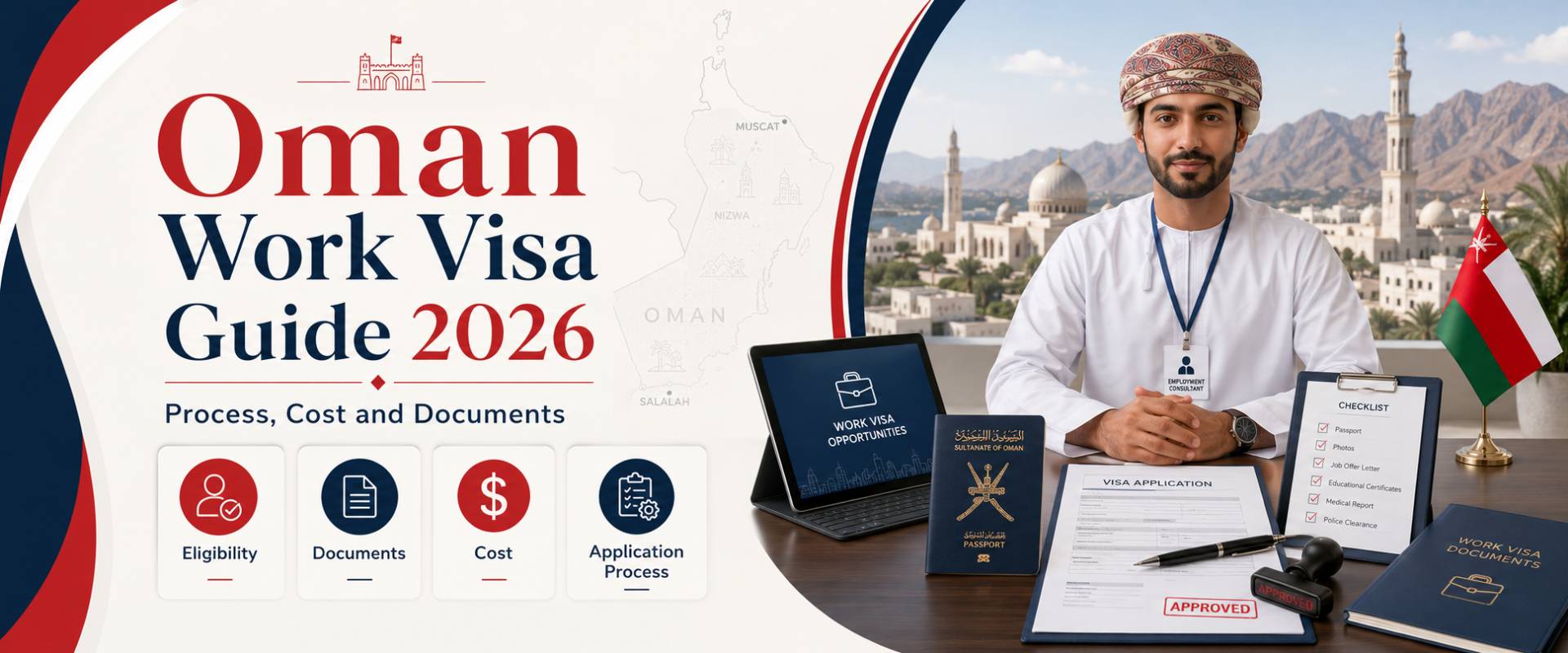
Key investor visa requirements for tech founders are: a valid Commercial Registration, a minimum share capital contribution in the company, a clean criminal record certificate, and valid health insurance. The investor visa is initially issued for one or two years and is renewable annually alongside the company’s trade license renewal. For the full investor visa process and document checklist, see our investor visa in Oman guide.
Founders who want to explore the Oman market before committing to company formation can enter on a business visa, which allows short-term market research and meetings without the right to manage or operate a company.
Oman’s Digital Infrastructure and What It Means for Tech Startups
Oman’s digital infrastructure investment has accelerated since 2022, with significant upgrades to national broadband coverage, government cloud platforms, smart city initiatives in Muscat and Sohar, and interconnected port digital systems at Sohar and Salalah. For tech startups, the practical implications are:
- Cloud services demand: Government agencies and large enterprises are migrating legacy systems to cloud infrastructure, creating demand for cloud integration, data migration, and SaaS solutions configured for Oman’s regulatory environment
- Cybersecurity gaps: The pace of digital infrastructure upgrades has outpaced security readiness, creating strong demand for cybersecurity assessment, managed security services, and compliance consulting for companies subject to Oman’s data protection and cybersecurity regulations
- Smart city contracts: Muscat Municipality and Sohar Industrial Port have active digital infrastructure programmes that award technology contracts to registered Oman companies. Mainland company registration is typically required to participate in government procurement
- Telecom infrastructure: Oman’s fibre rollout and 5G expansion create infrastructure for IoT applications in logistics, utilities, and smart building management, sectors where demand for Omani-registered technology providers is growing
Frequently Asked Questions
Can a foreigner start a tech startup in Oman with 100% ownership?
Yes. Foreign investors can own 100% of a technology or IT services company in Oman under the Foreign Capital Investment Law (Royal Decree 50/2019). This applies to IT consulting, software development, digital marketing, SaaS, and most other technology business activities. Fintech startups involving banking, payments, or lending may require Central Bank of Oman approval alongside the MOCIIP registration.
What is the cheapest way to start a tech company in Oman?
The lowest-cost route is registering an SPC (Single Person Company) or LLC with a virtual office address on the Oman mainland, which MOCIIP accepts for IT and software businesses. Total first-year costs start from approximately OMR 2,150, including commercial registration, OCCI membership, virtual office, and government fees. A physical office is not mandatory for IT companies in the first year of operations.
What is Knowledge Oasis Muscat, and is it good for tech startups?
Knowledge Oasis Muscat (KOM) is Oman’s dedicated technology free zone in the Al Rusayl area near Muscat. It offers 100% foreign ownership, simplified IT licensing, proximity to universities and research institutions, and connections to the Oman Technology Fund for startup investment. KOM is particularly well suited for software companies, IT consultancies, and digital service businesses that want free zone benefits while operating close to Muscat.
Does Oman have a startup visa for tech founders?
Oman does not have a separate startup visa category. Foreign tech founders who establish a company in Oman apply for an investor visa, which is issued to registered shareholders and directors of MOCIIP-registered companies. The investor visa allows the founder to reside in Oman and manage the business. It is issued for one to two years and is renewable annually with the company’s trade license.
What technology sectors have the best startup opportunities in Oman in 2025?
Based on current market gaps, the highest-opportunity tech sectors for low-capital startups in Oman are SaaS tools for SMEs, cybersecurity services, logistics technology, edtech and corporate training platforms, and healthtech clinic management systems. Digital infrastructure upgrades by government agencies and large enterprises are creating specific demand for cloud integration, cybersecurity, and IoT applications across the logistics and utilities sectors.
Does a tech startup in Oman need to register for VAT?
Technology businesses in Oman are subject to VAT registration once annual taxable turnover exceeds OMR 38,500. IT services, software licensing, and digital platform subscriptions are generally subject to standard-rate VAT at 5%. SaaS businesses serving clients outside Oman may qualify for zero-rated VAT treatment on those international transactions. Startups should confirm their VAT position with the Oman Tax Authority as revenue grows.
Conclusion
Starting a technology startup in Oman in 2026 is most straightforward for IT service companies, software development firms, and SaaS platforms that can operate on a mainland IT trade license or from Knowledge Oasis Muscat under a free zone license. Total first-year startup costs run from OMR 2,150 to OMR 6,800, depending on office requirements and visa processing. Foreign founders can hold 100% ownership under Royal Decree 50/2019. Fintech, healthtech, and telecom-related startups require additional sector authority approvals beyond the standard MOCIIP registration.
MakeMyCompany is a business setup consultancy in Muscat, Oman, providing company formation, IT trade license applications, investor visa processing, and PRO services for technology startups and founders establishing operations in Oman. Contact our team through omanbusinesssetup.com for expert guidance on tech startup registration in Oman.
About the Author
Shuja Ahmad is a Business Setup Consultant at MakeMyCompany, a business setup consultancy based in Muttrah, Muscat, Oman. He specialises in company formation, IT trade license applications, investor visa processing, and free zone company setup for technology startups and international founders entering the Oman market. Shuja assists tech founders in navigating MOCIIP registration, sector-specific regulatory approvals for fintech and healthtech companies, and PRO services throughout the company’s operational lifecycle. For expert guidance on business setup in Oman, visit MakeMyCompany at omanbusinesssetup.com.