
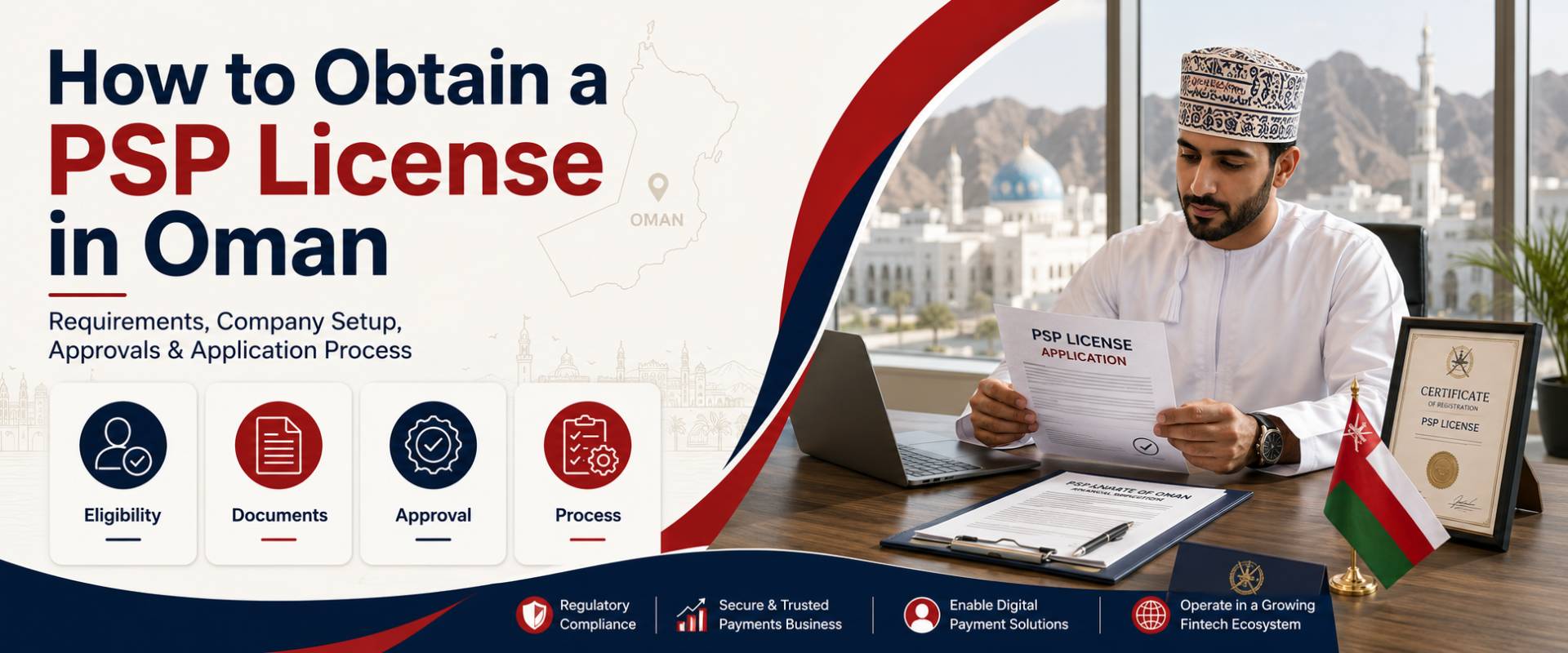

The digital payment landscape in Oman is rapidly evolving as the Sultanate embraces cashless transactions, e-commerce growth, and financial technology innovation. At the heart of this transformation lies the Payment Service Provider (PSP) license, a crucial regulatory authorization enabling companies to facilitate electronic payments, money transfers, and digital financial services. Whether you’re a fintech startup, an international payment platform, or a technology company seeking to offer payment solutions, obtaining a PSP license in Oman is your gateway to participating in this burgeoning sector. This comprehensive guide explains everything you need to know about the PSP licensing process, requirements, costs, and strategic considerations for entering Oman’s dynamic payment services market.
Table of Contents
What is a PSP License in Oman
A Payment Service Provider (PSP) license is an official authorization issued by the Central Bank of Oman (CBO) permitting companies to operate payment services and facilitate financial transactions within the Sultanate. This regulatory framework ensures consumer protection, financial system stability, and compliance with international standards for payment security and anti-money laundering.
Licensed payment service providers perform various critical functions including payment processing for merchants accepting card and digital payments, money remittance services enabling domestic and international fund transfers, electronic wallet operations managing digital money accounts, payment gateway services connecting e-commerce platforms with banking systems, and mobile payment solutions facilitating smartphone-based transactions. Each function operates under strict regulatory oversight ensuring transaction security, consumer fund protection, and system reliability.
The Central Bank of Oman established the PSP licensing framework to modernize Oman’s payment infrastructure, promote financial inclusion, encourage fintech innovation, and protect consumers from fraud and financial crimes. The regulatory structure aligns with international standards from organizations like the Financial Action Task Force (FATF), Basel Committee on Banking Supervision, and Payment Card Industry Data Security Standards (PCI DSS), positioning Oman as a credible jurisdiction for payment services.
PSP license holders can serve individual consumers, businesses, government entities, and financial institutions. Services extend across online and offline channels including e-commerce payments, point-of-sale terminals, mobile applications, and peer-to-peer transfer platforms. However, operations must remain within licensed activities, and expansion into new services requires regulatory approval.
Why is a PSP License Important in Oman
Understanding the significance of proper licensing helps entrepreneurs appreciate the value beyond mere regulatory compliance.
Legal Authorization and Market Access
Operating payment services without a PSP license constitutes illegal financial activity subject to severe penalties including substantial fines, business closure, and potential criminal prosecution. Licensed status provides legal authorization to process payments, access banking infrastructure, and establish merchant relationships essential for viable operations. Banks, card networks, and established merchants only partner with properly licensed payment providers, making the license your key to market access.
Consumer Trust and Credibility
Licensed payment service providers demonstrate commitment to regulatory standards, financial soundness, and consumer protection. This credibility becomes crucial when competing for merchant accounts, attracting consumers to digital wallets, and building partnerships with e-commerce platforms. Trust differentiates licensed providers from unlicensed operators, directly impacting user acquisition and transaction volumes.
Access to Financial Infrastructure
The PSP license enables direct connections with Omani banks, integration with national payment switches, access to card network systems (Visa, Mastercard), and participation in government payment initiatives. These infrastructure connections are restricted to licensed entities, making the license essential for operational capability.
Investor Confidence and Business Growth
International investors, venture capital firms, and strategic partners require regulatory compliance before investing in payment companies. A valid PSP license in Oman demonstrates legitimacy, reduces regulatory risk, and facilitates fundraising for business expansion. Additionally, licensed status enables cross-border partnerships with global payment platforms and financial technology companies.
Compliance with Vision 2040
Oman’s Vision 2040 emphasizes digital economy development and cashless society transformation. Licensed payment providers contribute to national objectives while benefiting from government support, infrastructure investments, and favorable regulatory treatment. Participation in this vision creates alignment with national priorities, potentially accessing grants, incentives, and preferential consideration for government contracts.
Types of PSP Licenses in Oman
The Central Bank of Oman issues different license categories based on service types and operational models.
Payment Processing License
This license authorizes companies to process card payments for merchants, handle transaction authorization and settlement, and provide point-of-sale terminal services. Payment processors facilitate the technical infrastructure connecting merchants with card networks and issuing banks. This category suits companies focusing on merchant acquiring and payment terminal deployment.
Money Transfer License
The money transfer license permits domestic and international fund transfers, remittance services for expatriate workers, and cross-border payment facilitation. Oman’s large expatriate population creates substantial demand for international remittance services, making this license particularly valuable for companies targeting this demographic.
E-Wallet and Stored Value License
This authorization enables operating electronic wallets storing digital money, prepaid card programs, and mobile money services. E-wallet providers must maintain appropriate float balances, implement robust security, and ensure instant transaction processing. This category experiences rapid growth as consumers embrace mobile payment convenience.
Payment Gateway License
Payment gateway licenses permit operating platforms connecting e-commerce websites with payment networks, processing online transactions securely, and managing payment routing and settlement. As e-commerce expands in Oman, payment gateway services become increasingly essential for online merchants.
Integrated Payment Service License
Some providers seek comprehensive licenses enabling multiple payment services under single authorization. This approach provides operational flexibility, diversified revenue streams, and the ability to offer complete payment solutions. However, integrated licenses involve higher capital requirements and more extensive compliance obligations.
Step-by-Step Guide to Obtaining a PSP License in Oman
Follow this systematic process to navigate the licensing journey successfully.
Step 1: Conduct Feasibility Assessment
Analyze the Omani payment market identifying service gaps, assessing competition, and determining viable business models. Evaluate capital requirements ensuring adequate resources for licensing, infrastructure, and sustained operations. Engage payment industry consultants understanding regulatory expectations and market dynamics.
Step 2: Establish Corporate Entity
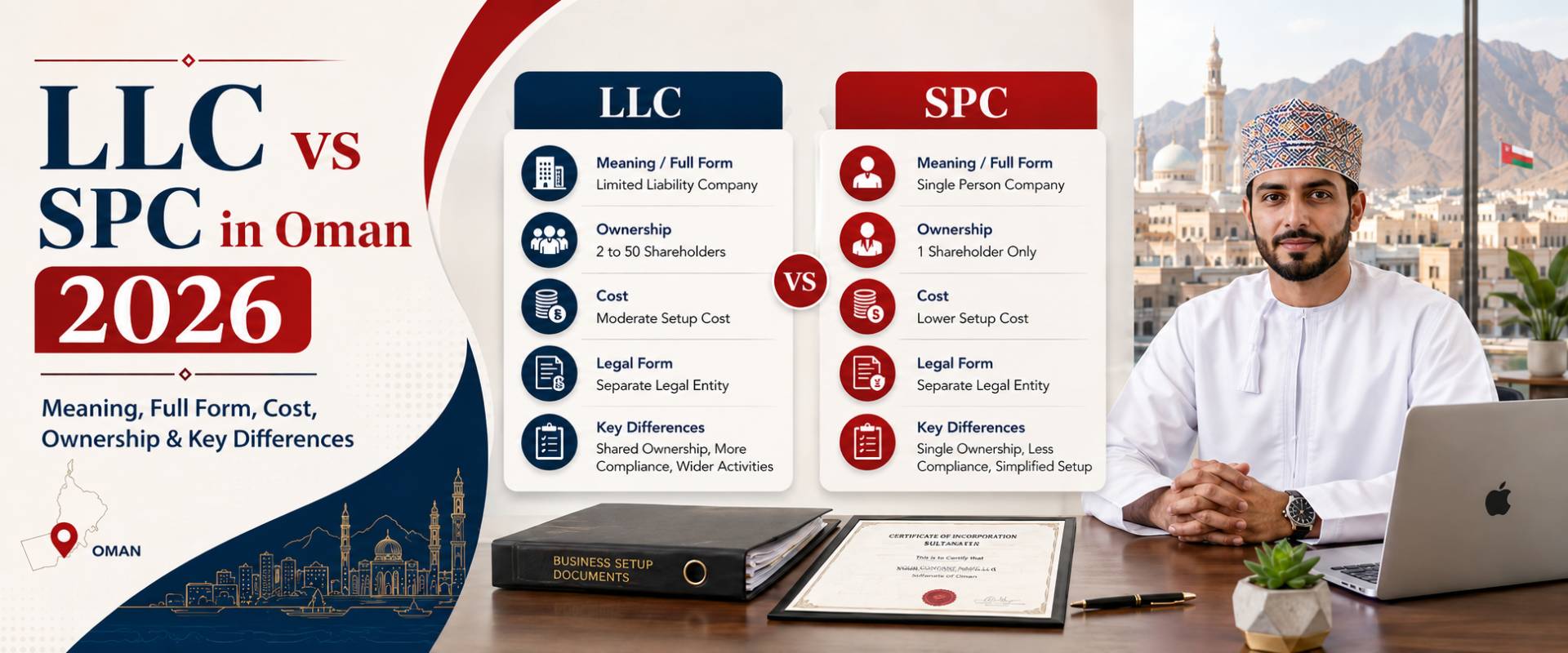
Register your company with the Ministry of Commerce, Industry and Investment Promotion (MOCIIP) establishing a Limited Liability Company (LLC) or Single Person Company (SPC). Ensure your Memorandum and Articles of Association specifically include payment services and financial technology activities. Complete registration with the Oman Chamber of Commerce and Industry (OCCI) and Oman Tax Authority (OTA).
Step 3: Prepare Technical Infrastructure
Develop or procure payment processing technology meeting Central Bank security requirements. Obtain PCI DSS certification demonstrating payment card industry compliance. Establish data centers or cloud infrastructure with adequate redundancy, backup systems, and disaster recovery capabilities. Implement cybersecurity measures including encryption, fraud detection, and transaction monitoring.
Step 4: Develop Compliance Framework
Create comprehensive anti-money laundering (AML) policies and procedures, establish know-your-customer (KYC) protocols, implement transaction monitoring systems, develop consumer protection policies, and create internal audit functions. These compliance frameworks form the foundation of your license application demonstrating regulatory readiness.
Step 5: Secure Minimum Capital
Deposit the required minimum capital into your corporate bank account obtaining bank certificates confirming availability. Capital requirements vary by license type but generally range from OMR 100,000 to OMR 500,000 depending on service scope and risk profile. Maintain this capital throughout operations as regulatory requirement.
Step 6: Submit PSP License Application
Prepare comprehensive application documentation including business plan, financial projections, technical infrastructure descriptions, compliance manuals, and management team qualifications. Submit applications to the Central Bank of Oman Financial Services Department with applicable fees. Applications undergo rigorous review examining financial soundness, technical capability, management competence, and compliance readiness.
Step 7: Respond to CBO Queries
The Central Bank typically requests additional information, clarifications, or documentation during review. Respond promptly and comprehensively to all queries. Be prepared for multiple rounds of questions as regulators thoroughly assess your application.
Step 8: Undergo Inspection and Assessment
The CBO may conduct on-site inspections examining your technical infrastructure, security systems, office facilities, and operational readiness. Demonstrate live system functionality, explain security protocols, and present compliance procedures. Inspectors evaluate whether actual capabilities match application representations.
Step 9: Receive License Approval
Upon satisfying all requirements, the Central Bank of Oman issues your PSP license specifying authorized activities, operational conditions, and ongoing compliance obligations. This approval process typically requires 6-12 months from initial submission depending on application completeness and complexity.
Step 10: Launch Operations and Maintain Compliance
Commence operations within licensed parameters, implement ongoing compliance monitoring, submit required periodic reports to the CBO, maintain capital adequacy, and renew licenses according to regulatory schedules. Establish continuous compliance culture ensuring sustained regulatory adherence.
Document Required To Obtain a PSP License in Oman
Comprehensive documentation demonstrates your readiness and capability to operate payment services responsibly.
Corporate Formation Documents:
- Commercial Registration certificate from MOCIIP
- Notarized Memorandum and Articles of Association
- OCCI membership certificate
- Tax registration from Oman Tax Authority
- Corporate bank account details and statements
- Proof of minimum capital deposit
Shareholder and Management Documents:
- Valid passports and residence visas (all shareholders and directors)
- Personal financial statements of major shareholders
- Curriculum vitae demonstrating relevant experience
- Educational certificates and professional qualifications
- Police clearance certificates from countries of residence
- Board resolution authorizing license application
Business Plan and Strategy:
- Comprehensive business plan with market analysis
- Financial projections for 3-5 years
- Revenue model and pricing strategy
- Target market and customer segments
- Marketing and growth strategies
- Competitive analysis
Technical Infrastructure Documentation:
- System architecture and technology stack
- Data center specifications or cloud infrastructure agreements
- Cybersecurity framework and measures
- Business continuity and disaster recovery plans
- PCI DSS certification (for card processing)
- System capacity and scalability documentation
- Transaction processing workflows
Compliance and Risk Management:
- Anti-money laundering (AML) policies and procedures
- Know-your-customer (KYC) protocols
- Transaction monitoring systems description
- Fraud prevention and detection mechanisms
- Consumer protection policies
- Complaint handling procedures
- Internal audit framework
- Risk management policies
Financial Documents:
- Audited financial statements (if existing company)
- Capital adequacy calculations
- Financial soundness evidence
- Insurance policies (professional indemnity, cyber liability)
- Bank references for shareholders
Operational Procedures:
- Standard operating procedures (SOPs)
- Employee training programs
- Quality assurance processes
- Customer onboarding procedures
- Transaction settlement processes
- Dispute resolution mechanisms
Legal and Regulatory:
- Legal opinions on compliance with Omani law
- Contracts with technology vendors
- Service level agreements with partners
- Consumer terms and conditions
- Privacy policies and data protection measures
How Much Does It Cost To Obtain a PSP License in Oman
Understanding comprehensive costs enables proper financial planning and prevents undercapitalization.
Regulatory and Licensing Fees:
- Central Bank of Oman license application fee: OMR 5,000-10,000
- Annual regulatory supervision fee: OMR 3,000-7,000
- License renewal fees: OMR 2,000-5,000 (typically every 3-5 years)
Company Formation Costs:
- MOCIIP Commercial Registration: OMR 200-400
- OCCI membership: OMR 200-400
- Legal and PRO services: OMR 2,000-5,000
- Document notarization: OMR 300-600
Minimum Capital Requirements:
- Basic PSP license: OMR 100,000-200,000
- Comprehensive payment services: OMR 300,000-500,000
- E-wallet services: OMR 200,000-400,000
Technology Infrastructure:
- Payment platform development or licensing: OMR 50,000-200,000
- PCI DSS certification: OMR 10,000-25,000
- Cybersecurity infrastructure: OMR 20,000-50,000
- Data center or cloud services: OMR 15,000-40,000 annually
Professional Services:
- Legal advisors and consultants: OMR 10,000-30,000
- Payment industry consultants: OMR 15,000-40,000
- Technical auditors: OMR 8,000-20,000
- Compliance specialists: OMR 5,000-15,000
Operational Setup:
- Office space and setup: OMR 10,000-30,000
- Staffing (first year): OMR 60,000-150,000
- Insurance premiums: OMR 5,000-15,000
Total Investment Estimate: Obtaining a PSP license and launching operations typically requires total investment of OMR 400,000-800,000 depending on service scope, technology choices, and operational scale. Smaller, focused operations may achieve licensing with OMR 300,000, while comprehensive payment platforms require OMR 1,000,000+.
Challenges in Obtaining a PSP License in Oman
Understanding potential obstacles helps you prepare effectively and develop mitigation strategies.
Stringent Regulatory Requirements
The Central Bank of Oman maintains rigorous standards for PSP licensing requiring extensive documentation, proven technical capabilities, and demonstrated financial soundness. Many applicants underestimate compliance depth and regulatory expectations, leading to application rejections or prolonged approval processes.
High Capital Requirements
Minimum capital thresholds create significant barriers for startups and small companies. Maintaining capital adequacy while funding operations, technology development, and market acquisition strains financial resources, particularly during pre-revenue phases.
Technical Complexity
Building payment infrastructure meeting CBO security standards, PCI DSS certification, and operational reliability requires specialized expertise. Many applicants struggle with technical requirements, cybersecurity implementation, and system scalability demonstration.
Lengthy Approval Timelines
The licensing process typically extends 6-12 months from initial submission to final approval. During this period, companies incur ongoing costs without revenue generation, requiring substantial runway capital. Unexpected delays from additional information requests or regulatory reviews further extend timelines.
Competition and Market Entry
Established payment providers, banks offering payment services, and international platforms create competitive pressures. New entrants must differentiate through superior technology, better pricing, niche market focus, or innovative features while building trust in a market favoring established players.
Ongoing Compliance Burden
Post-licensing compliance obligations including regular reporting, audits, system updates, and capital maintenance create continuous operational overhead. Small providers may struggle with compliance costs relative to transaction volumes, affecting profitability.
Conclusion
Obtaining a PSP license in Oman represents a significant but achievable milestone for companies committed to participating in the Sultanate’s digital payment transformation. While the process involves substantial capital investment, technical development, regulatory compliance, and patient navigation of approval procedures, successful licensing positions your company in a high-growth market with strong government support and increasing consumer adoption. By thoroughly preparing documentation, developing robust technical infrastructure, demonstrating financial soundness, and engaging experienced advisors, you can successfully navigate the licensing journey and establish a thriving payment services business contributing to Oman’s cashless economy vision while generating sustainable commercial returns.