
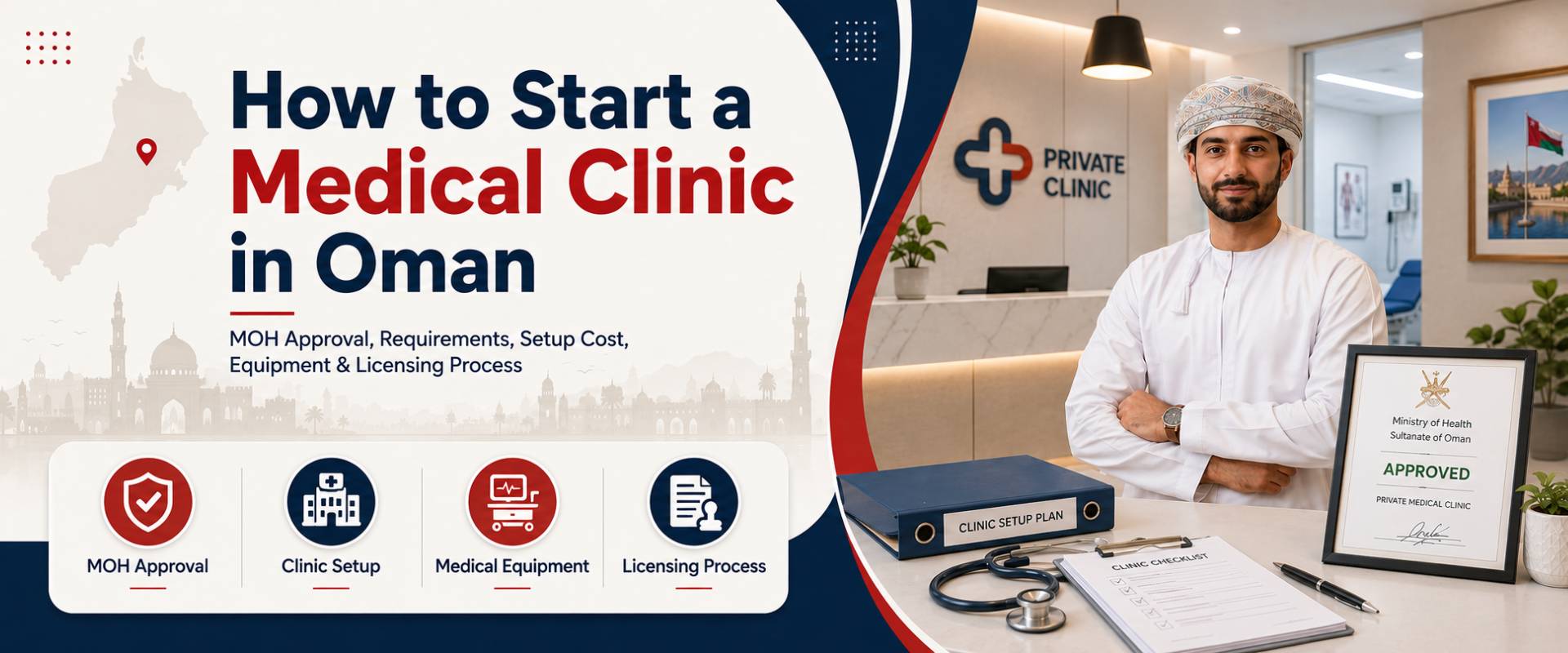

The healthcare sector in Oman presents exceptional opportunities for medical professionals and healthcare entrepreneurs seeking to establish private practices. As the Sultanate invests heavily in health infrastructure and promotes public-private partnerships, demand for quality medical services continues rising across specializations. Whether you’re a medical specialist, general practitioner, or healthcare investor, understanding the complete process for establishing a medical clinic ensures compliance with strict regulatory standards while positioning your facility for success.
This comprehensive guide walks you through everything you need to know about opening a private clinic in Oman, from licensing requirements to operational setup.
Table of Contents
Overview Of Oman HealthCare Industry
The Omani healthcare market has evolved significantly, driven by government investment, demographic changes, and increasing health awareness among the population. The sector is valued at approximately OMR 1.8 billion annually, with private healthcare accounting for nearly 35% of total healthcare expenditure.
Market Growth and Demand
The healthcare industry experiences robust growth projected at 6-8% annually over the next five years. Key drivers include population growth averaging 2.5% yearly, creating increased service demand, aging demographics requiring more medical attention, rising chronic disease prevalence including diabetes and cardiovascular conditions, growing health consciousness prompting preventive care, and expanding health insurance coverage mandating private sector participation.
Government initiatives under Vision 2040 prioritize healthcare quality improvement, specialized medical services development, medical tourism promotion, and private sector healthcare expansion. These policies create favorable conditions for private medical clinics and specialized healthcare facilities.
Specialization Opportunities
High-demand medical specializations include dental clinics serving aesthetic and general dentistry needs, dermatology clinics addressing skin conditions and cosmetic procedures, physiotherapy centers treating musculoskeletal conditions, fertility clinics providing reproductive health services, pediatric clinics serving families with children, ophthalmology practices for eye care, orthopedic clinics treating bone and joint issues, and diagnostic centers offering laboratory and imaging services.
General practice clinics remain viable particularly in residential areas underserved by existing facilities. Multi-specialty clinics combining several disciplines under one roof attract patients seeking comprehensive care.
Competitive Landscape
The market includes government hospitals providing subsidized care, large private hospitals offering comprehensive services, specialized clinics focusing on specific medical fields, and individual practitioner clinics serving local communities. Success requires differentiation through specialized expertise, superior patient experience, convenient locations, modern facilities and equipment, or competitive pricing strategies.
Why Open a Medical Clinic in Oman?
Establishing a medical clinic in Oman offers numerous advantages for healthcare professionals and investors.
Strong Market Demand
Oman’s growing population combined with increasing per capita income creates sustained demand for quality private healthcare. Many patients prefer private clinics for shorter waiting times, personalized attention, modern facilities, and comprehensive service offerings. Insurance expansion drives patient volumes as covered individuals actively seek private medical services.
Supportive Regulatory Environment
The Ministry of Health (MOH) maintains clear licensing frameworks facilitating legitimate clinic establishment while ensuring quality standards. Recent reforms streamline approval processes, reduce bureaucratic delays, and encourage private sector healthcare investment. The government recognizes private healthcare’s role in reducing public system burden and improving overall health outcomes.
Attractive Returns on Investment
Well-managed medical clinics achieve profitability within 18-36 months depending on specialization and location. Profit margins typically range 20-35% for established facilities. Specialized services command premium pricing while general practice generates consistent patient volumes. Multiple revenue streams including consultations, procedures, diagnostics, and pharmacy sales enhance financial sustainability.
Professional Independence
Clinic ownership provides medical professionals with practice autonomy, flexible scheduling, direct patient relationships, and unlimited earning potential compared to hospital employment. You control clinical protocols, patient care standards, facility environment, and business direction.
Growing Expatriate Market
Oman’s substantial expatriate population exceeding 40% of total population represents significant market opportunity. Expatriates typically carry health insurance, prefer English-speaking providers, and seek international standard care. Clinics catering to this demographic through multilingual staff and familiar care approaches build loyal patient bases.
Legal Requirements for Opening a Medical Clinic in Oman
Operating a medical clinic requires meeting stringent regulatory standards administered by multiple government authorities.
Medical Professional Licensing
All practicing physicians must hold valid medical licenses from the Ministry of Health (MOH). The licensing process for foreigners medical license in Oman involves credential verification from home countries, educational certificate attestation through embassies, professional experience documentation, Good Standing Certificates from previous practice locations, and competency assessments or examinations as determined by MOH.
Omani nationals with medical degrees must similarly obtain MOH licensing though the process may differ slightly regarding documentation requirements. Licenses are specialty-specific, permitting practice only within qualified medical fields.
Clinic Establishment License
Beyond individual practitioner licenses, the facility itself requires a clinic establishment license from MOH. This authorization verifies that premises, equipment, staffing, and operational protocols meet regulatory standards for safe, quality patient care.
The MOH differentiates between general clinics, specialized clinics, diagnostic centers, and multi-specialty facilities, each with distinct requirements. Your license specifies permitted services, ensuring you operate within authorized scope.
Business Registration
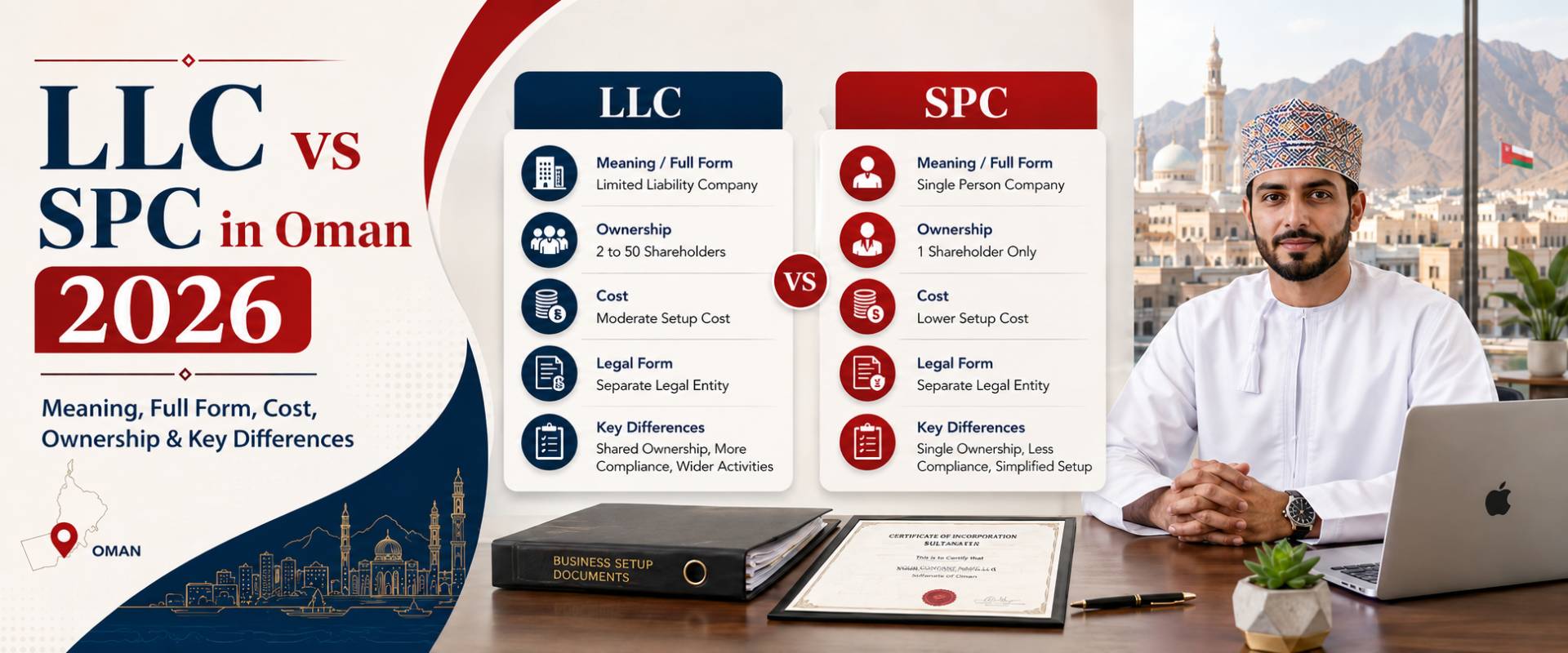
All clinics must register as legal business entities through the Ministry of Commerce, Industry and Investment Promotion (MOCIIP). Healthcare facilities typically operate as Limited Liability Companies (LLC) owned by licensed medical professionals. Foreign physicians establishing clinics may require Omani partnership depending on ownership regulations, though recent reforms have expanded opportunities for majority foreign ownership in healthcare.
The Commercial Registration establishes your legal business identity, enabling banking relationships, insurance contracts, and supplier agreements.
Facility Standards Compliance
MOH enforces strict facility standards including minimum space requirements for consultation rooms, examination areas, and waiting rooms, proper ventilation, lighting, and climate control systems, medical waste disposal protocols and equipment, infection control measures and sterilization facilities, emergency equipment and medications, disabled access and safety features, and adequate restroom and handwashing facilities.
Facility inspections verify compliance before license issuance and during periodic renewals.
Staffing Requirements
Clinics must maintain appropriate staffing including licensed physicians in relevant specialties, registered nurses with valid MOH credentials, qualified medical assistants and support staff, and administrative personnel for reception and records management.
Staff-to-patient ratios vary by specialty and clinic type, ensuring adequate care delivery without overburdening medical personnel.
Insurance and Liability Coverage
Medical malpractice insurance is mandatory, protecting practitioners and facilities against liability claims. Coverage amounts vary by specialty and facility type, with minimums typically starting at OMR 100,000. Comprehensive insurance packages also cover property, equipment, and general business liabilities.
Step-by-Step Process to Obtain a Medical Clinic License in Oman
Establishing your medical clinic involves systematic progression through regulatory requirements.
Step 1: Secure Individual Medical License
Before establishing a clinic, ensure you hold a valid medical license from the Ministry of Health. If you haven’t already obtained Omani medical licensing, complete that process first including credential verification, examination passage if required, and license issuance.
This individual authorization permits medical practice and serves as a prerequisite for clinic establishment licenses.
Step 2: Develop Business Plan
Create a comprehensive business plan outlining your clinic concept, target specializations, target patient demographics and market analysis, service offerings and pricing strategies, facility requirements and location preferences, staffing plans and organizational structure, financial projections covering startup costs and revenue forecasts, and marketing strategies for patient acquisition.
A detailed plan guides decision-making and demonstrates viability to regulatory authorities and potential partners or investors.
Step 3: Choose Business Structure and Partners
Decide on your business structure, typically LLC for medical clinics. If you’re a foreign medical professional, determine whether you need Omani partnership based on current ownership regulations. Select partners carefully, ensuring shared vision, complementary skills, and clear agreement terms.
Prepare partnership documents including Memorandum of Association (MoA) and Articles of Association (AoA) detailing ownership percentages, profit distribution, decision-making authority, and dispute resolution mechanisms.
Step 4: Register Business with MOCIIP
Submit a business registration application to MOCIIP including your business plan, partnership agreements, individual medical licenses of all physician partners, proposed clinic location details, and capital deposit certificates meeting minimum requirements (typically OMR 20,000-50,000 for medical clinics).
MOCIIP processes applications verifying documentation completeness and compliance with commercial regulations before issuing Commercial Registration certificates.
Step 5: Secure and Prepare Clinic Location
Identify suitable premises meeting MOH facility standards. Consider location factors including accessibility in residential or commercial areas, adequate parking for patients and staff, proximity to target patient populations, competitive positioning relative to existing clinics, and compliance with municipal zoning for medical facilities.
Lease or purchase property, then undertake necessary renovations ensuring compliance with MOH facility specifications. This includes proper room sizing and configuration, medical-grade flooring and wall finishes, appropriate lighting and ventilation, plumbing for examination and sterilization areas, and electrical systems supporting medical equipment.
Step 6: Procure Medical Equipment
Purchase necessary medical equipment and furnishings including examination tables and diagnostic instruments, sterilization equipment, emergency medical supplies, waiting room furniture, administrative furniture and computer systems, and specialty-specific equipment for your practice focus.
Ensure all equipment meets safety standards and obtain necessary calibration certificates for diagnostic devices.
Step 7: Submit Clinic License Application to MOH
Compile comprehensive documentation and submit your clinic establishment license application to the Ministry of Health. The application includes your Commercial Registration certificate, individual medical licenses for all physicians, detailed clinic layout plans and floor diagrams, equipment lists with specifications and certificates, staffing structure and employee credentials, medical waste management protocols, infection control procedures, emergency response protocols, and proposed service offerings and pricing.
MOH reviews applications thoroughly, evaluating facility adequacy, equipment appropriateness, staff qualifications, and operational protocol compliance.
Step 8: Facility Inspection
MOH inspectors conduct on-site facility evaluations verifying premises meet all regulatory standards. Inspectors assess physical infrastructure, equipment functionality, safety features, infection control measures, emergency preparedness, and overall operational readiness.
Address any deficiencies identified during inspection before proceeding to license issuance. Re-inspections may be required if significant issues are found.
Step 9: Obtain Additional Approvals
Secure supplementary approvals including municipal business license from local municipality, Civil Defense fire safety certificate from Royal Oman Police, environmental health clearance if applicable, and pharmacy license if operating in-house pharmacy.
Each authority conducts separate assessments ensuring compliance with respective regulations.
Step 10: Receive License and Begin Operations
Upon successful completion of all requirements, MOH issues your clinic establishment license authorizing legal medical practice. Display this license prominently in your reception area as required by regulations.
Complete final operational preparations including staff hiring and training, inventory stocking, patient management system implementation, and marketing campaign launch before officially opening to patients.
Required Documents To Register a Medical Clinic License in Oman
Comprehensive documentation ensures smooth licensing processes:
- Valid medical licenses for all practicing physicians
- Educational certificates and medical degrees with full attestation
- Professional experience certificates and curriculum vitae
- Good Standing Certificates from previous practice locations
- Valid passports (for foreign physicians) or National IDs (for Omani physicians)
- Commercial Registration certificate from MOCIIP
- Memorandum of Association and Articles of Association
- Partnership agreements detailing ownership and responsibilities
- Clinic location lease agreement or property ownership documents
- Detailed architectural plans and facility layouts
- Municipal approval and zoning compliance certificate
- Equipment lists with specifications and purchase invoices
- Equipment calibration certificates for diagnostic devices
- Staffing plan including physicians, nurses, and support staff
- Nurse licenses and credentials for all nursing staff
- Medical waste management contract and disposal protocols
- Infection control procedures and protocols documentation
- Emergency response plans and equipment lists
- Medical malpractice insurance policy documents
- Professional liability insurance certificates
- Proposed service menu and pricing structure
- Patient record management protocols
- Privacy and confidentiality policies
- Quality assurance and improvement plans
- Pharmacy license application (if applicable)
- Laboratory license application (if offering lab services)
- Radiology license (if providing imaging services)
Costs of Starting a Medical Clinic in Oman
Understanding complete financial requirements enables realistic planning:
Initial Licensing and Registration
- Individual medical license fees: OMR 100-300 per physician
- Business registration at MOCIIP: OMR 300-500
- Clinic establishment license from MOH: OMR 1,000-3,000
- Municipal business license: OMR 200-500
- Civil Defense clearance: OMR 100-300
Capital and Facility Costs
- Minimum capital deposit (LLC): OMR 20,000-50,000
- Clinic premises lease (annual): OMR 8,000-30,000
- Facility renovation and compliance: OMR 10,000-40,000
- Medical equipment and instruments: OMR 20,000-100,000
- Furniture and fixtures: OMR 5,000-15,000
- IT systems and software: OMR 3,000-8,000
Insurance and Professional Services
- Medical malpractice insurance (annual): OMR 2,000-8,000
- Property and business insurance: OMR 1,000-3,000
- Legal and consulting services: OMR 2,000-6,000
- Document attestation: OMR 500-1,500
Operational Setup
- Initial medical supplies and inventory: OMR 3,000-10,000
- Marketing and branding: OMR 2,000-8,000
- Staff recruitment (initial salaries): OMR 5,000-15,000
- Working capital (6 months): OMR 15,000-40,000
Total Estimated Investment: OMR 97,200-338,100 depending on clinic size, specialization, location, and equipment sophistication.
General practice clinics typically fall in the OMR 100,000-150,000 range, while specialized facilities requiring advanced equipment may exceed OMR 250,000.
Benefits of Opening a Medical Clinic in Oman
Establishing a private clinic offers substantial professional and financial advantages.
High Earning Potential
Successful medical clinics generate significant revenue through consultation fees averaging OMR 15-50 depending on specialization, procedure fees for medical interventions, diagnostic services including laboratory and imaging, and medication sales through in-house pharmacies. Multi-specialty clinics diversify revenue streams enhancing financial stability.
Professional Autonomy
Clinic ownership provides complete control over practice style, patient care protocols, facility environment, staff selection, working hours, and business direction. This independence enables physicians to practice medicine aligned with their values and standards.
Patient Relationship Building
Private practice facilitates deeper patient relationships compared to hospital employment. Continuity of care, personalized attention, and direct communication build trust and loyalty, creating rewarding professional experiences.
Scalability Opportunities
Successful single-location clinics can expand through additional branches in different areas, hiring associate physicians, expanding capacity, adding new specialties, creating multi-specialty centers, or franchising proven clinic models.
Market Leadership
Specialized expertise or exceptional service quality establishes your clinic as a market leader, attracting referrals from other physicians, insurance partnerships, and media opportunities enhancing reputation.
How Make My Company Helps You To Open A Medical Clinic in Oman
Navigating the complex regulatory landscape of healthcare licensing requires specialized expertise. Make My Company provides comprehensive support for business setup in Oman, specifically tailored for medical professionals establishing clinics.
Our experienced consultants assist with complete business registration including business structure consultation, MOCIIP Commercial Registration processing, partnership agreement preparation, and capital deposit coordination. We guide you through MOH licensing including clinic license application preparation, facility compliance consulting, equipment specification guidance, and inspection preparation support.
We coordinate with regulatory authorities including the Ministry of Health, MOCIIP, municipal offices, and Civil Defense, leveraging established relationships to expedite approvals. Our services include complete documentation preparation, attestation coordination, application submission and tracking, and issue resolution.
Beyond licensing, we provide operational support including staff visa processing for foreign medical personnel, accounting and financial system setup, insurance arrangement facilitation, and marketing strategy consultation.
Whether you’re an Omani physician or foreign medical professional seeking practice establishment, our tailored solutions match your specific needs. We’ve successfully helped numerous healthcare professionals establish medical clinics across various specializations throughout Oman.
Ready to launch your medical clinic and serve Oman’s growing healthcare needs? Contact us today to receive personalized consultation on licensing requirements, facility standards, and strategic clinic development. Our comprehensive service packages ensure your healthcare facility launches efficiently while maintaining full regulatory compliance, positioning you for sustainable success in Oman’s dynamic medical sector.