

Starting a transport business in Oman requires commercial registration with the Ministry of Commerce, Industry and Investment Promotion (MOCIIP), a transport operating license from the Ministry of Transport, Communications and Information Technology, commercial vehicle registration with the Royal Oman Police (ROP), and sector-specific permits before any passenger or freight service can legally operate. Each approval is sequential, and each authority has its own documentation requirements.
Oman’s transport sector covers road freight, passenger transport, logistics, cold chain, and specialized heavy haulage, each with its own licensing track. This guide covers the complete process for starting a transport company in Oman: license requirements, legal structures, the step-by-step registration process, commercial vehicle permits, documents required, startup costs in OMR, and how mainland and free zone structures compare for transport operations. For a broader overview of business setup in Oman, see our main services page.
Transport Company License Requirements in Oman
Every transport business operating in Oman must hold a transport operating license issued by the Ministry of Transport, Communications, and Information Technology. This license is specific to transport activities and is separate from the standard commercial registration. The required license type depends on the transport activity.
Freight and Logistics Transport License
Businesses engaged in road freight transport, logistics, and cargo hauling must obtain a freight transport operating license. This covers trucks, heavy goods vehicles, and commercial vans used for cargo. The license specifies the category of goods, the permitted vehicle types, and the operating routes. Road freight transport in Oman is a significant sector, connecting Muscat and the interior governorates with Sohar Port, Salalah Port, and the UAE and Saudi borders.
Passenger Transport License
Companies providing passenger transport services, including bus services, employee transport, school transport, and airport transfers, require a separate passenger transport operating license. Taxi and ride-hailing operations are subject to additional regulation under the ministry’s public transport framework.
Specialized Transport License
Heavy equipment haulage, cold chain transport for perishable goods, and hazardous materials transport each require specialized permits beyond the standard transport license. These applications require additional safety documentation, vehicle certification, and, in some cases, route pre-approval from the ministry.
Choosing the Right Legal Structure for a Transport Company in Oman
The legal entity you register determines ownership rules, liability protection, and your ability to bid for corporate contracts. Two structures are most commonly used for transport companies in Oman.
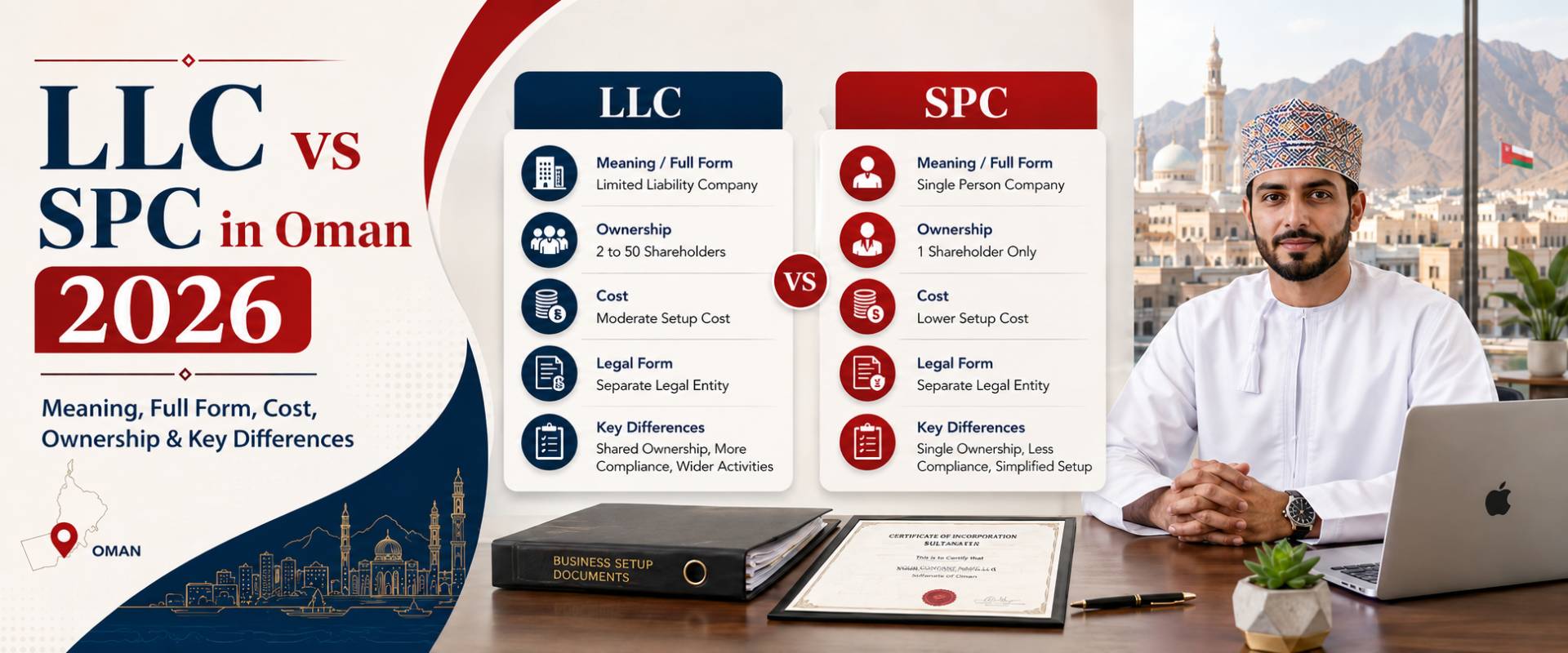
Limited Liability Company (LLC)
For transport companies, an LLC is the only practical structure for securing government freight tenders, obtaining ministry-issued route permits, and entering corporate logistics contracts, all of which require a mainland-registered legal entity. The Omanisation obligations specific to the transport sector also make a mainland LLC the operationally correct choice, since free zone entities cannot fulfil domestic staffing ratios or hold domestic route authorizations. Foreign investors must bring an Omani partner who holds at least a 30% shareholding. Share capital requirements for transport LLCs typically start at OMR 150,000 or above when fleet acquisition value is included in the company formation documents. See our full guide to LLC company formation in Oman for the complete process.
Free Zone Company
Foreign investors seeking 100% ownership in the transport or logistics sector can register through a free zone such as Sohar, Salalah, or Duqm. Free zone transport and logistics companies serve corporate clients within the zone and handle international freight, but face restrictions on direct domestic road transport operations. For companies whose primary activity is port-side logistics or international freight forwarding, a free zone structure may be the more practical choice. See our guides to Sohar Free Zone and Salalah Free Zone for zone-specific details.
Step-by-Step Transport Company Registration in Oman
The following sequence covers the complete transport company registration process in Oman, from company formation through to the issuance of an operating license.
- Reserve your trade name with MOCIIP. Submit three proposed names through the Invest Easy portal. The name must reflect a transport or logistics activity. Transport companies typically use terms such as transport, logistics, freight, haulage, or distribution in their trade name to signal the licensed activity to the ministry during the subsequent license application.
- Complete company registration with MOCIIP. Submit the full formation package to MOCIIP. For transport companies, this includes the partnership agreement, Memorandum of Association listing transport and logistics as the primary activity, share capital deposit certificate, shareholder identification, and the lease for your operational premises, including yard or warehouse space. MOCIIP cross-references the activity description against the transport ministry licensing category during processing. The CR is typically issued within seven to ten working days of a complete submission.
- Secure your operational premises. Sign a lease for commercial office space. Freight and logistics companies typically also require a yard or warehouse facility. The lease agreement is required for both MOCIIP registration and the transport license application.
- Register vehicles for commercial use with ROP. All vehicles used in transport operations must carry a commercial registration issued by the Royal Oman Police, not a private registration. For freight transport companies, ROP classifies each vehicle by its payload capacity and assigns it to a goods vehicle category that determines the routes it can legally use, its weight bridge compliance obligations, and its eligibility for cross-border permits. Trucks, articulated lorries, and heavy goods vehicles each follow a separate classification track. Submit vehicle purchase documents, payload specifications, insurance certificates, and technical inspection records to ROP for the correct commercial category assignment.
- Obtain commercial vehicle insurance. Every vehicle in the transport fleet must hold commercial vehicle insurance covering third-party liability, comprehensive damage, cargo liability where applicable, and passenger coverage for passenger transport vehicles. Insurance is mandatory before ROP will issue a commercial registration, and before the transport ministry will issue the operating license.
- Apply for the transport operating license from the Ministry of Transport. Submit your CR, vehicle documents, insurance certificates, premises lease, driver credentials, and operational procedures to the ministry. Processing typically takes three to five weeks for a complete application.
- Obtain route permits where applicable. Passenger transport companies and some freight operators require route-specific permits in addition to the general operating license. These are issued by the ministry following route assessment.
- Register with the local municipality. Obtain the municipal business license for the governorate in which your transport operations are based. Transport and logistics businesses with a yard, warehouse, or heavy vehicle parking facility are assessed at a higher municipal fee band than standard office-based businesses. Annual municipal fees for transport operators typically range from OMR 400 to OMR 1,200, depending on the size of the premises and the governorate authority.
Commercial Vehicle Permit Requirements in Oman
All vehicles used in a commercial transport business in Oman must carry a commercial vehicle permit from the Royal Oman Police. This is a separate classification from private vehicle registration and is a legal requirement for any vehicle used to transport passengers or goods for payment.
Requirements for commercial vehicle registration with ROP include:
- Vehicle roadworthiness inspection: All commercial vehicles must pass an ROP technical inspection covering brakes, tyres, lights, emissions, and safety equipment before commercial registration is issued.
- Commercial insurance certificate: Valid commercial vehicle insurance must be in place before ROP will process the commercial registration.
- Vehicle fitness certificate: Heavy goods vehicles and passenger transport vehicles require periodic fitness certification from an approved testing centre.
- Goods vehicle classification: Freight vehicles are classified by payload capacity. The correct classification determines route permissions, bridge restrictions, and permit categories applicable to the vehicle.
Businesses planning to operate heavy goods vehicles on routes connecting Oman with the UAE or Saudi Arabia must also obtain cross-border transport permits from the Ministry of Transport in addition to standard domestic commercial registration.
Types of Transport Businesses You Can Register in Oman
Oman’s transport sector is diverse, and the correct license category depends on the specific activity. The main transport business types available for registration in Oman include:
Road Freight and Cargo Transport
Companies hauling goods by road across Oman’s governorates or cross-border into the UAE and Saudi Arabia. This includes general cargo, bulk goods, construction materials, and commercial supply chain deliveries. Road freight transport in Oman is closely tied to the activity at Sohar Port and the industrial zones, where large volumes of imports require inland distribution.
Logistics and Freight Forwarding
Freight forwarding companies in Oman manage the movement of goods through customs, coordinate multimodal transport (sea, air, and road), and provide warehousing and distribution services. A freight forwarding company requires both a transport license and a separate freight forwarding registration with the ministry. Oman’s ports at Sohar, Salalah, and Muscat are the primary hubs for international freight forwarding activity.
Passenger Transport
Bus services, employee transport contractors, school bus operators, and airport transfer companies all fall under passenger transport licensing. Corporate employee transport is a strong and stable segment, with large industrial projects and free zone operators regularly contracting transport companies for staff movements.
Cold Chain and Specialized Transport
Cold chain logistics for food and pharmaceuticals, heavy equipment haulage for construction and mining, and hazardous materials transport each require specialized permits. These segments carry higher regulatory requirements but also command premium rates and longer-term contracts from operators in the food, pharmaceutical, and energy sectors.
Documents Required for Transport Company Registration in Oman
A complete document package submitted at each stage avoids processing delays. The following documents are required at both the MOCIIP registration and the transport ministry license application stages.
For MOCIIP Company Registration
- Valid passport copies for all shareholders and directors
- Partnership agreement and Memorandum of Association
- Share capital deposit certificate from an Omani bank
- Commercial office and operational premises lease agreement
- Proposed trade name reservation confirmation
For Transport Ministry License Application
- Commercial Registration certificate from MOCIIP
- Vehicle purchase or lease documents for all fleet vehicles
- ROP commercial vehicle registration certificates
- Commercial vehicle insurance certificates covering all vehicles
- Driver’s license copies for all drivers employed or contracted
- Operational procedures and fleet management plan
- Route plan or service description for passenger transport applications
- Warehouse or yard lease agreement for freight and logistics companies
Cost of Starting a Transport Business in Oman
Startup cost for a transport company in Oman varies significantly based on fleet size, vehicle type, and whether the business focuses on freight, passenger transport, or logistics. The table below covers the main cost components for a standard entry-level freight transport operation.
| Cost Item | Estimated Range (OMR) |
| MOCIIP company registration | 300 to 600 |
| LLC minimum share capital | 20,000 to 30,000 |
| Transport ministry operating license | 500 to 2,000 |
| Municipal business license (annual) | 200 to 500 |
| Commercial vehicle fleet (5 trucks) | 75,000 to 200,000 |
| ROP commercial registration per vehicle | 150 to 400 |
| Commercial fleet insurance (annual per vehicle) | 600 to 1,800 |
| Office and yard or warehouse (annual) | 8,000 to 30,000 |
| Driver recruitment and training | 2,000 to 6,000 |
| Fleet management software and GPS tracking | 1,500 to 6,000 |
| Initial staff salaries (3 months) | 5,000 to 15,000 |
| Marketing and business development | 2,000 to 8,000 |
| Working capital reserve | 10,000 to 25,000 |
| Total estimated investment (5 vehicles) | 125,000 to 320,000 |
Passenger transport businesses typically have lower vehicle acquisition costs than heavy freight operations but carry higher driver staffing costs. Cold chain and specialized transport businesses carry higher equipment costs but can achieve significantly better margins on long-term contracts. Fleet financing through Omani banks is available to registered transport companies holding a valid transport ministry license.
Driver and Staffing Requirements for Transport Companies in Oman
All drivers employed or contracted by a transport company in Oman must hold a valid Omani driving license for the category of vehicle they operate. Foreign drivers must hold a license recognized under Oman’s licensing reciprocity agreements, or convert their foreign license to an Omani license through the Royal Oman Police before operating commercially.
Heavy goods vehicle drivers require a heavy vehicle license endorsement. Passenger transport drivers for licensed bus or employee transport services may also need route-specific authorizations from the transport ministry, depending on the service type.
Foreign drivers and transport staff require valid residence visas sponsored by the transport company. The Ministry of Labour sets visa quotas based on the company’s CR activity, fleet size, and Omanisation requirements applicable to the transport sector.
Conclusion
Starting a transport business in Oman follows a clear regulatory pathway: MOCIIP company registration, transport ministry operating license, ROP commercial vehicle permits, and municipal approval. The total startup cost for a freight transport company with five vehicles typically ranges from OMR 125,000 to OMR 320,000, with fleet acquisition accounting for the majority of the cost. Passenger transport and logistics companies have different cost profiles depending on vehicle type and operational scope.
Getting the license category, vehicle permits, and documentation right from the start avoids delays and repeated submissions to the transport ministry. MakeMyCompany assists transport entrepreneurs and investors with every stage of transport company setup in Oman, from MOCIIP registration and transport license applications to commercial vehicle documentation, driver visa processing, and bank account opening. Contact our team at omanbusinesssetup.com to get started.
Frequently Asked Questions
What license is required to start a transport business in Oman?
A transport operating license from the Ministry of Transport, Communications, and Information Technology is required, in addition to the standard Commercial Registration from MOCIIP. The specific license type depends on whether the business operates freight, passenger, or specialized transport services.
How much does it cost to start a transport company in Oman?
A freight transport company with five vehicles typically requires an investment of OMR 125,000 to OMR 320,000 for startup, covering company registration, share capital, operating license, vehicle purchase, commercial insurance, premises, and staffing. Passenger transport businesses have different cost profiles depending on vehicle type and fleet size.
Can a foreigner start a transport company in Oman?
Yes. Foreign investors can establish a transport company in Oman through a mainland LLC with an Omani partner, or through a free zone company for freight and logistics operations. Mainland LLCs are required for domestic road transport and passenger services with unrestricted access to all governorates.
How long does it take to register a transport company in Oman?
MOCIIP company registration typically takes seven to ten working days. The transport ministry’s operating license will take an additional 3 to 5 weeks. The total time from initial application to operating license is approximately 8 to 12 weeks when all documents are submitted correctly.
Do all vehicles need commercial registration in Oman?
Yes. Every vehicle used in a commercial transport operation must be registered with the Royal Oman Police. Using privately registered vehicles for commercial transport is not legally permitted and invalidates insurance coverage.
What is the difference between a freight transport license and a freight forwarding license?
A freight transport license covers the physical movement of goods by road using owned vehicles. A freight forwarding license covers the coordination and management of cargo movement through multiple transport modes and customs, without the forwarder necessarily owning the vehicles. The Ministry of Transport issues both and has separate application requirements for each.
Can a transport company in Oman operate cross-border into the UAE or Saudi Arabia?
Yes, but cross-border freight transport requires additional cross-border transport permits from the Ministry of Transport, in addition to standard domestic commercial registration. These permits specify permitted routes, vehicle categories, and cargo types for international movements.
What Omanisation requirements apply to transport companies?
Transport companies in Oman are subject to Omanisation requirements set by the Ministry of Labour, which mandate minimum percentages of Omani nationals in the workforce. The applicable percentage varies by sector category and company size. Non-compliance affects the eligibility of foreign staff for visa quotas.
About the Author
Shuja Ahmad is a Business Setup Consultant at MakeMyCompany, a business formation consultancy based in Muttrah, Muscat, Oman. He specialises in business setup in Oman across all sectors, including transport company registration, freight transport licensing, logistics company formation, coordination of commercial vehicle permits, and investor visa processing. With direct experience assisting freight operators, passenger transport companies, and logistics businesses through the full MOCIIP and Ministry of Transport registration process, Shuja advises entrepreneurs and foreign investors on the most efficient and compliant route to launching a transport company in Oman. For professional guidance on transport company license requirements, registration process, and startup costs, visit omanbusinesssetup.com.