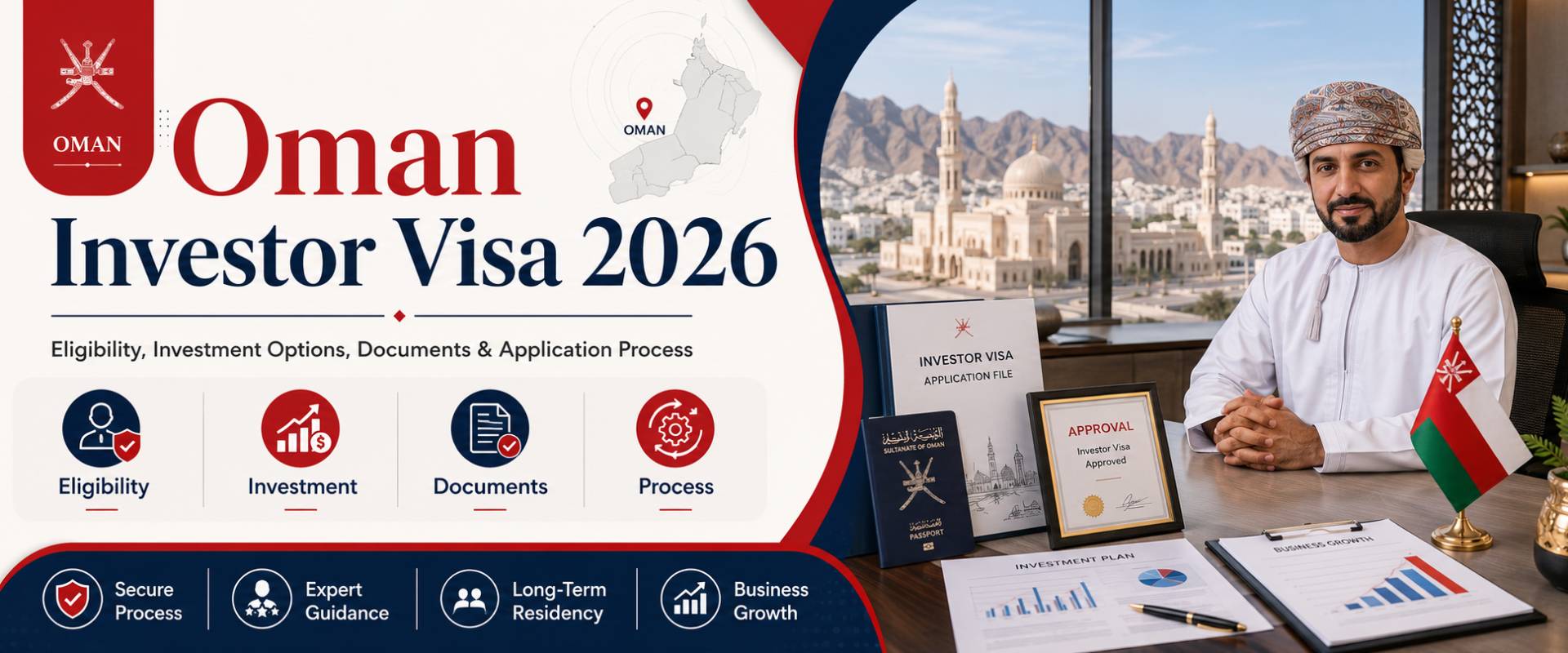


Foreign investors can own 100% of a company in Oman across most commercial sectors under the Foreign Capital Investment Law (FCIL), Royal Decree 50/2019. This law removed the previous requirement for an Omani partner in most mainland business activities, allowing international entrepreneurs to register and operate fully foreign-owned companies through the standard MOCIIP commercial registration process. Certain strategic industries remain restricted under a negative list and continue to require Omani participation or special government approval.
Foreign-owned companies in Oman must comply with employment regulations, including Omanisation quotas, which set minimum percentages of Omani nationals in the workforce by sector. Understanding both the ownership rules and the employment compliance obligations is essential before making any investment decision. This guide covers the FCIL framework, which sectors allow 100% ownership, which remain restricted, the legal structures available to foreign investors, employment and Omanisation rules, foreign property ownership rights, and the step-by-step registration process. For a full overview of the setup process, see our guide to business setup in Oman.
Foreign Capital Investment Law in Oman: Royal Decree 50/2019
The Foreign Capital Investment Law, issued under Royal Decree 50/2019, is the primary legislation governing foreign investment in Oman. It replaced the earlier Foreign Capital Investment Law and introduced several important reforms:
- 100% foreign ownership permitted in most sectors without requiring an Omani partner on the mainland
- Negative list maintained for sectors where foreign ownership is restricted or requires special ministerial approval
- Equal treatment guarantee for foreign investors, giving them the same legal protections as Omani investors in permitted activities
- Minimum capital requirements set by MOCIIP on an activity-by-activity basis, with OMR 150,000 the standard benchmark for most foreign-owned LLCs
- Repatriation of profits guaranteed, allowing foreign investors to transfer dividends and capital outside Oman without restriction
MOCIIP administers the law through the Invest Easy portal, which is the single platform for all submissions for company registration, licensing, and approvals by foreign investors.
Sectors Allowing 100% Foreign Ownership in Oman
Under the FCIL, 100% foreign ownership is permitted in most commercial, industrial, and service sectors. The following table summarizes the main permitted categories:
| Sector | Notes on Foreign Ownership |
| Trading and general commerce | 100% permitted, mainland LLC |
| Professional and consulting services | 100% permitted, mainland OPC or LLC |
| Information technology and software | 100% permitted |
| Manufacturing and industrial | 100% permitted, higher capital requirements |
| Logistics and freight forwarding | 100% permitted, or via free zone |
| Real estate development | 100% permitted under FCIL reforms |
| Tourism, hospitality, and F&B | 100% permitted in most categories |
| Healthcare and medical services | 100% permitted, additional MOH licensing |
| Education and training | 100% permitted, additional ministry approval |
| Construction contracting | Mainland: 30% Omani partner typically required |
Free zone entities in Sohar, Salalah, Duqm, and Al Mazunah always permit 100% foreign ownership regardless of sector, subject to the zone’s own licensing conditions. See our guides to free zone company formation in Oman for zone-specific details.
Restricted Sectors Under the Oman Negative List
The negative list under the FCIL identifies sectors where full or partial foreign ownership is not permitted or requires special government approval. Restrictions apply to protect national security, strategic resources, and specific professional categories. The main restricted areas include:
- Defence and military supply: Reserved for Omani entities or requires direct government authorization
- Oil and gas extraction: Upstream activities are reserved for state entities and approved concession holders. Downstream and services are generally open.
- Certain media and broadcasting: Specific media activities require Omani shareholding
- Certain retail activities: Some small-scale retail categories are restricted to Omani nationals under commercial protection regulations
- Legal practice: Foreign law firms cannot practice Omani law directly and must operate in association with licensed Omani firms
- Real estate brokerage: Certain property brokerage activities have Omani national requirements
The negative list is reviewed and updated periodically by the Ministry of Commerce, Industry and Investment Promotion. Investors should verify the current status of their activity category with MOCIIP before submitting a company formation application.
Legal Structures Available to Foreign Investors in Oman
| Structure | Foreign Ownership | Min. Capital | Best For |
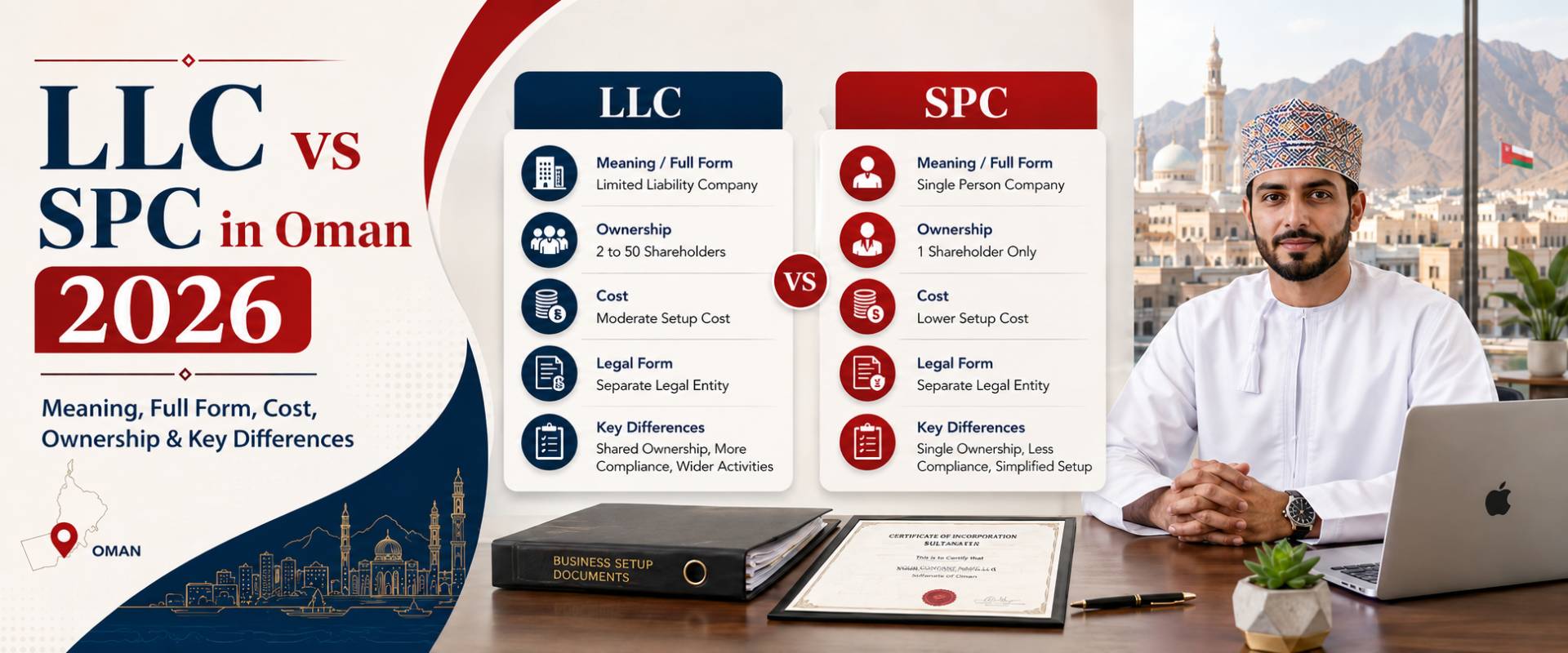
| LLC | Up to 100% | OMR 150,000+ | SMEs, trading, services |
| One Person Company (OPC) | 100% | Lower threshold | Solo professionals, consultants |
| Joint Stock Company (JSC) | Foreign participation allowed | High | Large enterprises, IPO candidates |
| Branch of foreign company | Parent company owns 100% | No fixed minimum | International firms, project work |
| Free zone entity | 100% | OMR 5,000 to 50,000 | Export, logistics, manufacturing |
For companies considering a branch office, see our dedicated guide to opening a branch office in Oman. For LLC formation specifically, see our guide to LLC company formation in Oman.
Foreign Investment Employment Regulations in Oman
Every foreign-owned company registered in Oman must comply with employment regulations set by the Ministry of Labour. These obligations apply from the moment the company hires its first employee and are monitored through the company’s labour file registered with the ministry. Non-compliance results in visa quota restrictions, fines, and in serious cases, suspension of the commercial license.
Omanisation Quotas by Sector
Omanisation is the national employment policy requiring private sector companies to employ a minimum percentage of Omani nationals in their workforce. Quotas are set by sector and reviewed periodically by the Ministry of Labour. The following table shows approximate Omanisation thresholds applicable to foreign-owned companies in major sectors:
| Sector | Approximate Omanisation Rate |
| Banking and financial services | 90% or above |
| Insurance | 75% or above |
| Engineering consultancy | 35% or above |
| Trading and retail | 20% to 35% |
| Information technology | 15% to 20% |
| Construction | 15% to 25% |
| Transport and logistics | 20% or above |
| Hospitality and tourism | 15% or above |
New companies with fully foreign ownership are generally required to have at least one Omani national employee within the initial operational period. Companies that do not meet Omanisation thresholds face restrictions on new work permit approvals, which directly limits the business’s ability to hire foreign staff.
Labour Law Obligations for Foreign-Owned Companies
Foreign-owned companies in Oman must comply with the Labour Law on the following key matters:
- Employment contracts: All employees must hold written contracts specifying salary, role, working hours, and leave entitlements. Contracts must comply with the Omani Labour Law minimum standards
- End-of-service gratuity: Employees completing at least one year of service are entitled to end-of-service gratuity calculated at 15 days of basic salary per year for the first three years and one month per year thereafter
- Annual leave: Minimum 30 days of paid annual leave per year after completing one year of service
- Work permits: All foreign employees must hold valid work permits issued by the Ministry of Labour and residence visas sponsored by the employing company. Work permit quotas are linked to the company’s Omanisation compliance status
- Social insurance: Omani national employees must be registered with the Public Authority for Social Insurance (PASI), with employer and employee contributions as set by law
Foreign Property Ownership Rights in Oman
Foreign nationals can purchase freehold property in Oman within designated Integrated Tourism Complexes (ITCs) approved by the Ministry of Housing and Urban Planning. Outside ITC zones, foreign buyers can hold long-term leasehold interests of up to 50 years, renewable by agreement. Direct freehold ownership of land or property outside designated zones is not permitted for non-Omani individuals.
Foreign companies registered in Oman can lease commercial and industrial premises anywhere in the country. Freehold purchase of commercial premises by a foreign-owned Omani company is subject to approval and the specific property type and zoning classification. All property transactions must be registered with the Ministry of Housing and Urban Planning.
Conclusion
Under the Foreign Capital Investment Law (Royal Decree 50/2019), foreign investors can own 100% of a company in Oman in most sectors. Employment and Omanisation regulations apply to all foreign-owned companies from the point of first hire and are enforced through labour file monitoring, work permit quota controls, and periodic inspections. Getting the ownership structure, activity category, and employment compliance framework right from the start protects the business from regulatory disruption and license restrictions.
MakeMyCompany assists foreign investors with every stage of company formation in Oman, from FCIL eligibility assessment and activity code selection to MOCIIP registration, Omanization planning, work permit processing, and corporate bank account opening. Contact our team at omanbusinesssetup.com to discuss your foreign ownership setup in Oman.
Frequently Asked Questions
Can foreigners own 100% of a company in Oman?
Yes. Under the Foreign Capital Investment Law (Royal Decree 50/2019), foreign investors can own 100% of a company in Oman across most commercial and service sectors without requiring an Omani partner. Certain industries on the negative list remain restricted.
Which sectors are restricted for foreign ownership in Oman?
Restricted sectors include defence and military supply, upstream oil and gas extraction, certain media activities, select retail categories reserved for Omani nationals, legal practice of Omani law, and some real estate brokerage activities. The negative list is maintained by MOCIIP and reviewed periodically.
What is the minimum capital for a foreign-owned company in Oman?
The standard benchmark for a foreign-owned mainland LLC is OMR 150,000 in share capital deposited in an Omani bank. Free zone companies can be established with OMR 5,000 to OMR 20,000, depending on the zone. Regulated sectors carry higher thresholds.
What are the Omanisation requirements for foreign companies?
Foreign-owned companies must employ a minimum percentage of Omani nationals set by sector. Rates range from 15% for IT and hospitality to 90% for banking. New companies must have at least one Omani employee within the initial operational period. Non-compliance restricts work permit quota approvals.
Can foreigners buy property in Oman?
Foreign nationals can purchase freehold property within designated Integrated Tourism Complexes. Outside ITCs, leasehold interests of up to 50 years are available. Foreign-owned Omani companies can lease commercial premises anywhere in the country.
What is the difference between an LLC and a free zone company for foreign investors in Oman?
A mainland LLC under FCIL allows operations across all of Oman’s domestic market, with up to 100% foreign ownership and a minimum capital of OMR 150,000. A free zone company also allows 100% ownership at lower capital thresholds but restricts direct retail operations in the domestic market outside the zone: free zones suit export, logistics, and manufacturing businesses.
Does a foreign-owned company in Oman need to comply with the Omani Labour Law?
Yes. All foreign-owned companies registered in Oman must fully comply with the Labour Law, including employment contracts, end-of-service gratuity, annual leave, work permits, and social insurance registration for Omani employees. Compliance is monitored through the labour file registered with the Ministry of Labour.
Can a foreign company open a branch in Oman?
Yes. Foreign corporations can establish a branch in Oman to conduct activities aligned with their parent company’s operations. Branch offices are suitable for international firms executing government contracts or large-scale projects. See our guide to opening a branch office in Oman for the full process.
About the Author
Shuja Ahmad is a Business Setup Consultant at MakeMyCompany, a business formation consultancy based in Muttrah, Muscat, Oman. He specialises in business setup in Oman for foreign investors, including FCIL eligibility assessment, 100% foreign ownership company registration, free zone formation, Omanisation compliance planning, work permit processing, and employment regulation advisory. Shuja assists international entrepreneurs and corporations at every stage of setting up a foreign-owned company in Oman, from activity selection and MOCIIP registration to operational licensing and labour compliance. For expert guidance on foreign ownership rules and company formation in Oman, visit omanbusinesssetup.com.